


A plate carrier is a protective vest designed to hold hard armor plates over the torso. It provides a platform for ballistic protection and equipment attachment, making it widely used in military, law enforcement, security, and other professional applications. Its protective performance depends on the armor plates, their compatibility with the carrier, and correct positioning on the body.
A proper plate carrier setup involves selecting compatible armor, assembling the carrier components, and organizing additional equipment. Plate carrier fit is equally important. Incorrect sizing or adjustment can cause the armor to shift, restrict movement, or leave important areas inadequately covered.
Understanding the different types of plate carriers, their components, and the principles of proper fit helps users make informed equipment decisions.
What Is a Plate Carrier?
Definition and Purpose
A plate carrier is a wearable armor platform designed to hold removable ballistic plates. Unlike traditional soft body armor, which generally uses flexible protective materials, a plate carrier accommodates rigid armor inserts in dedicated front and back compartments.
The carrier itself does not provide ballistic protection unless it contains appropriate protective materials. Its primary function is to position and secure compatible armor plates over the torso while supporting the attachment of additional equipment.
Hard armor plates are commonly manufactured using materials such as ceramic composites, ultra-high-molecular-weight polyethylene (UHMWPE), and steel. Their protective capabilities vary according to material composition, construction, and tested ballistic rating.
Plate carriers serve several purposes:
- Ballistic protection: Hold compatible armor plates over designated areas of the torso.
- Equipment carriage: Provide attachment points for medical supplies, communication equipment, and other mission-essential items.
- Load distribution: Distribute the weight of armor and attached equipment across the shoulders and torso.
- Mobility: Provide a relatively adjustable platform that allows movement while carrying protective equipment.
Main Components of a Plate Carrier
Most plate carriers consist of several interconnected components. Their construction and adjustment systems vary by manufacturer and design.
Front and Back Panels
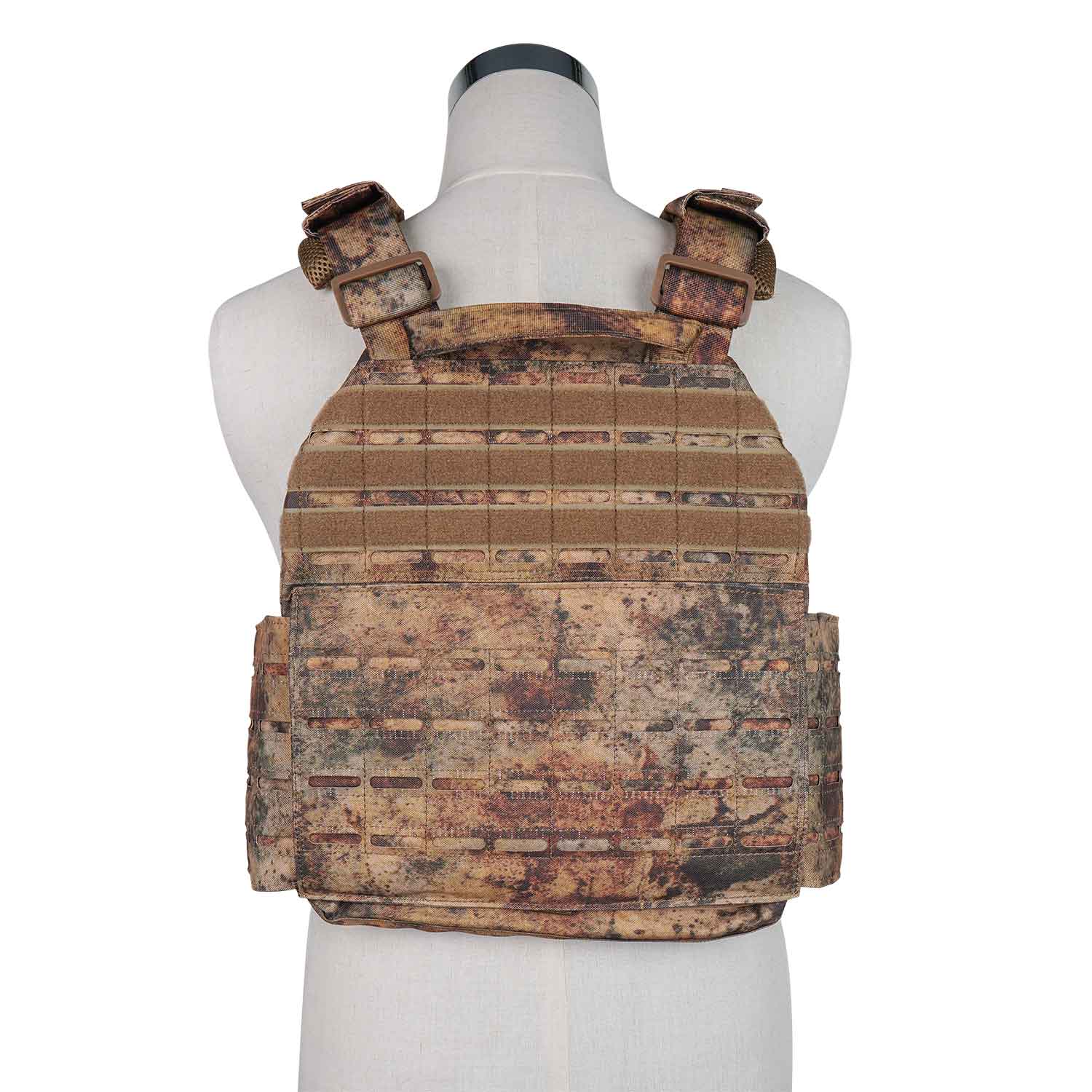
The front and back panels contain dedicated compartments for armor plates. They provide the main structural support and determine how the armor sits against the torso. Panel dimensions and pocket construction must match the intended plate specifications.
Plate Pockets
Plate pockets secure the armor inserts inside the carrier. They are designed for particular plate dimensions, thicknesses, and cuts. Compatibility should always be checked before purchasing or installing armor.
Shoulder Straps
Shoulder straps connect the front and back panels. They support part of the carrier’s weight and allow adjustments to the overall ride height. Some designs use fixed straps, while others provide adjustable or padded configurations.
Cummerbund
A cummerbund connects the front and back sections around the sides of the torso. It helps stabilize the carrier and may provide additional attachment space for compatible accessories.
MOLLE Webbing
MOLLE (Modular Lightweight Load-carrying Equipment) webbing consists of attachment loops or rows integrated into the carrier. It allows compatible pouches and accessories to be mounted in different positions.
Different Types of Plate Carriers
Plate carriers come in several configurations. The main differences involve their construction, attachment capacity, coverage, and intended applications.
Minimalist Plate Carriers
Minimalist plate carriers use a relatively lightweight structure with limited padding and attachment points. They are designed to reduce unnecessary material and overall bulk.
These carriers generally have simpler panel construction and fewer accessory attachment options. Their compact design makes them suitable for applications where a streamlined armor platform is preferred.
Modular Plate Carriers
Modular plate carriers feature attachment systems that support different pouches and accessories. Many use MOLLE-compatible webbing across the front, back, and sides.
Their configuration can accommodate different equipment requirements. However, adding accessories increases the total carried weight, so compatibility and load distribution should be considered during setup.
Low-Profile Plate Carriers
Low-profile plate carriers are designed with a more streamlined appearance and reduced external bulk. Depending on the model, they may have fewer attachment points and a simpler overall structure.
They are commonly considered for applications where minimizing the external profile and maintaining a less bulky fit are priorities.
The appropriate design depends on the required armor coverage, plate compatibility, equipment needs, and intended working environment.
Plate Carrier Setup: Main Components and Configuration
A proper plate carrier setup starts with the armor plates and the carrier’s structural components. Each part must be compatible with the others to create a stable and functional system.
Front and Back Panels
The front and back panels form the main structure of the carrier. Before assembly, check their dimensions and confirm that their plate compartments match the intended armor.
Both panels should hold their respective plates securely without excessive movement or deformation. Incorrect panel dimensions can cause poor positioning and affect the carrier’s overall fit.
Plate Pockets and Armor Compatibility
Armor compatibility is one of the most important considerations when setting up a plate carrier.
Check the following specifications before selecting plates:
- Plate dimensions: Confirm that the height and width match the carrier’s specifications.
- Plate thickness: Make sure the pocket can accommodate the plate without excessive compression or deformation.
- Plate cut: Check whether the carrier supports the intended plate shape, such as SAPI, shooter, or swimmer cuts.
- Plate weight: Consider how the weight of the armor affects the overall carrier load.
- Ballistic rating: Select armor based on the required threat protection and verified testing information.
Not all armor plates are interchangeable. A plate that fits physically may still be unsuitable for a particular carrier or application.
Always follow the armor and carrier manufacturers’ compatibility specifications.
Shoulder Straps and Cummerbund
Shoulder straps and the cummerbund work together to stabilize the carrier.
Shoulder straps support the front and back panels and allow adjustment of their relative positioning. The cummerbund helps maintain the carrier’s position around the torso.
Their adjustment should provide a stable fit without excessive pressure on the shoulders, chest, or ribs. Both components should be checked together because changing one can affect the position and tension of the other.
Pouches and Accessory Attachment
Many plate carriers include MOLLE webbing or other attachment systems for compatible accessories.
Common accessory categories include:
- Medical pouches for first-aid supplies.
- Utility pouches for small tools and equipment.
- Communication pouches for compatible devices.
- General-purpose storage pouches.
Before attaching accessories, consider their dimensions, weight, accessibility, and compatibility with the carrier.
Avoid unnecessary attachments. Excessive equipment can increase fatigue, create pressure points, and interfere with normal movement.
Weight Distribution and Load Management
The total weight of a plate carrier includes the carrier itself, armor plates, and attached accessories. These components should be considered as one system.
Uneven loading can create additional pressure on one shoulder or side of the torso. Excessive front-loaded equipment can also increase discomfort during extended wear.
A well-organized setup should distribute the load as evenly as the carrier design allows. Regularly review attached equipment and remove items that are not required for the intended application.
How Should a Plate Carrier Fit?
Plate carrier fit affects comfort, stability, and armor positioning. The correct fit depends on body measurements, plate dimensions, carrier design, and manufacturer specifications.
Choosing the Right Plate Size
Plate size should be determined by torso measurements and the coverage requirements of the intended armor system.
Do not select plates based only on height, body weight, or clothing size. These measurements do not reliably establish the correct armor dimensions.
Consider the following factors:
- Torso dimensions: Measure according to the plate manufacturer’s sizing instructions.
- Plate shape: Different plate cuts provide different coverage around the upper chest and shoulder areas.
- Carrier compatibility: Confirm that the selected plate dimensions match the carrier’s plate pockets.
- Coverage requirements: Ensure that the plate provides the intended protective coverage without unnecessarily restricting movement.
Manufacturers may offer different plate sizes and cuts. Always use their sizing charts rather than assuming that the same nominal size fits every carrier.
Proper Plate Positioning
The position of the armor plates is essential to the overall fit.
The front and back plates should sit securely in their designated compartments and follow the positioning guidance provided by the armor manufacturer.
The front plate should cover its intended upper-torso protection area without sitting excessively low or interfering with normal shoulder movement. The back plate should also remain properly positioned against the torso.
Incorrect positioning can reduce the intended coverage and create discomfort during movement.
Do not rely on appearance alone to determine whether a plate is correctly positioned. Follow the manufacturer’s fitting instructions and have the setup checked by a qualified armor professional when necessary.
Adjusting Shoulder Straps and Cummerbund
Once the armor plates are installed, adjust the shoulder straps and cummerbund according to the carrier manufacturer’s instructions.
The shoulder straps should support the carrier without digging into the neck or creating excessive pressure. The cummerbund should hold the carrier securely around the torso without restricting normal breathing.
A properly adjusted carrier should:
- Remain stable during ordinary movement.
- Avoid excessive pressure on the shoulders and ribs.
- Allow normal breathing and upper-body movement.
- Keep the armor secured within its designated compartments.
Make small adjustments and reassess the overall fit. Excessive tightening does not necessarily improve stability and may create additional pressure points.
Checking Comfort and Mobility
A fit check should evaluate both stability and freedom of movement.
After adjusting the carrier, check the following:
- Standing position: Confirm that the front and back panels remain properly positioned.
- Breathing: Take several deep breaths to check for excessive pressure around the chest and ribs.
- Shoulder movement: Raise and move the arms to identify restrictions or uncomfortable contact points.
- Torso movement: Bend and rotate the upper body to check for shifting or pinching.
- Load stability: Check whether the carrier remains secure with the intended armor and accessories installed.
Repeat these checks whenever the armor plates, carrier configuration, or attached equipment changes.
Common Plate Carrier Fit and Setup Mistakes
Even a well-designed carrier can become uncomfortable or unsuitable when its components are incorrectly selected or adjusted.
Using Incompatible Armor Plates
A plate may appear to fit inside a carrier but still be incompatible because of its thickness, shape, or dimensions.
Always check the carrier’s specifications before installing armor. Physical fit alone does not confirm compatibility.
Incorrect Carrier Sizing
An oversized carrier may shift during movement, while an undersized carrier may create excessive pressure or fail to accommodate the intended plates.
Choose the carrier based on its published sizing specifications and the dimensions of the selected armor.
Poor Weight Distribution
Attaching too many accessories or concentrating equipment in one area can create an uneven load.
Review the total weight and accessory arrangement. Keep the configuration appropriate for the intended application.
Over-Tightening or Loose Straps
Loose straps can allow the carrier to shift, while excessively tight adjustments can restrict breathing and create discomfort.
Adjust the shoulder straps and cummerbund together, following the manufacturer’s instructions. Check stability without compromising comfort.
Frequently Asked Questions
What Is the Difference Between a Plate Carrier and a Tactical Vest?
A plate carrier is specifically designed to hold removable hard armor plates. A tactical vest is a broader category of wearable equipment that may focus on carrying accessories, providing storage, or supporting different types of protective materials. Some tactical vests accommodate armor, but not all are designed for hard ballistic plates.
Do Plate Carriers Come With Armor Plates?
It depends on the product and manufacturer. Some plate carriers are sold as empty carriers without armor, while other packages include compatible armor plates. Always check the product description and included components before purchasing.
Can You Wear a Plate Carrier Without Plates?
Yes. A plate carrier can physically be worn without armor plates, depending on its design. However, an empty carrier does not provide the ballistic protection associated with properly rated armor plates. It should not be treated as protective body armor.
How Do You Know If a Plate Carrier Fits Correctly?
A properly fitted plate carrier should hold compatible armor securely in the intended position without excessive movement or pressure. It should also allow normal breathing, shoulder movement, and torso mobility. Follow the manufacturer’s sizing and positioning instructions to verify the fit.
Conclusion
A plate carrier is an armor platform that combines protective plate compartments with an adjustable structure for carrying compatible equipment. Selecting the right carrier involves considering plate dimensions, armor compatibility, carrier construction, and intended use.
A proper plate carrier setup requires compatible components, sensible accessory organization, and balanced weight distribution. Correct plate carrier fit ensures that the armor remains securely positioned while allowing normal breathing and movement.
Understanding these factors helps users evaluate plate carriers more effectively and select configurations that meet their protection, comfort, and equipment requirements.