

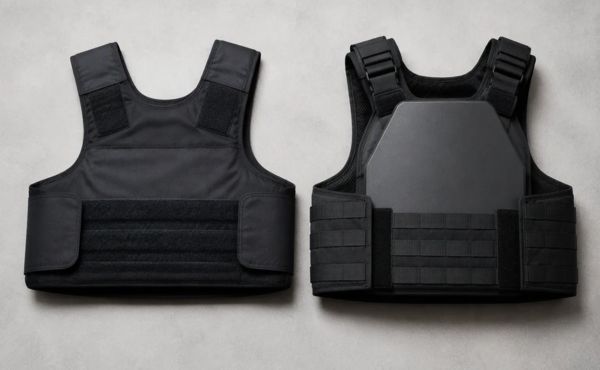
Soft body armor bends with the body. Hard body armor stays rigid. That single physical difference shapes everything else — the threats each type stops, how it feels over a long shift, and where it belongs.
Soft armor hides under a uniform shirt. Hard armor carries rifle-rated plates in an external carrier. Neither option wins outright. Threat level, setting, and daily wearer needs decide the match.
Protection ratings, comfort, testing standards, and cost separate these two categories. Readers who weigh those factors against their own environment will land on armor suited to the job, not armor chosen by habit.
The Core Difference
Soft armor and hard armor solve the same problem in two different ways. One moves with the body. The other holds its shape. That physical split drives every other difference between them, from threat coverage to how a vest feels at the end of a long shift.
Flexible vs Rigid
Flexibility is the first dividing line. A flexible panel conforms to the torso. A rigid plate does not. This single trait shapes how each type is worn, where it sits on the body, and what it can realistically protect. A flexible panel can be worn under clothing. A rigid plate usually needs an external carrier.
Soft Armor Construction
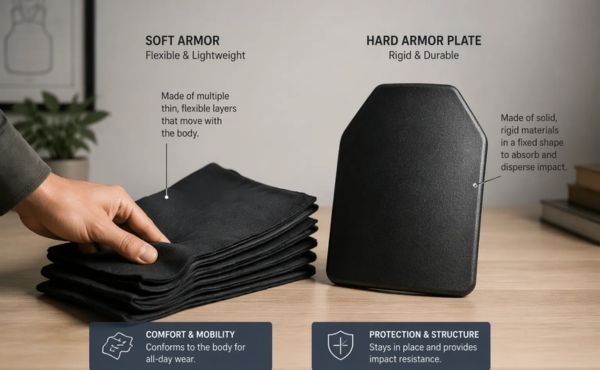
Soft body armor is built from many thin layers of woven or laminated fiber. Each layer is pliable on its own. Stacked together, the layers flex like heavy fabric. A wearer can bend, twist, sit, and reach without the panel fighting back. The vest drapes over the torso and follows its contours. This construction lets the armor sit close to the body under a uniform shirt. Concealment becomes practical because the panel leaves no hard edges to print through clothing. The layers also overlap slightly, so the panel keeps coverage when the body moves.
Hard Armor Construction
Hard armor uses rigid plates. A plate holds a fixed shape and does not fold or drape. It slides into a carrier pocket on the front, back, or sides of an external vest. The plate spreads impact across its whole surface instead of deforming around the body. That rigidity is the point. A plate keeps its geometry under stress, and the carrier holds it in place over the vital organs. Wearers accept the bulk because the plate delivers protection a flexible panel cannot. Plate size and shape follow the wearer’s torso length, so fit matters as much as the material.
Handgun vs Rifle Threats
Each armor type is engineered around a different threat class. Soft armor targets handgun rounds. Hard plates target rifle rounds. The distinction comes from projectile velocity and energy, not from quality.
| Armor type | Primary threat | Typical rating |
|---|---|---|
| Soft armor | Handgun rounds | NIJ Level II or IIIA |
| Hard armor | Rifle rounds | NIJ Level III or IV |
A handgun round travels at modest velocity and carries limited energy. Layered fiber can catch it and spread the force across the panel. A rifle round moves much faster and delivers far more energy to a small point. Flexible fiber alone cannot reliably stop it. A hard plate defeats the round by shattering or redirecting it at the surface. Neither design is superior in general. Each one matches a specific threat, and a wearer who faces both threats needs both types. Rating labels reflect this split. Level II and IIIA cover handgun threats. Level III and IV cover rifle threats. A buyer should match the label to the rounds they expect to face.
Everyday Wear vs High-Risk Use
The right choice depends on the wearer’s environment and daily routine. A patrol officer working a routine shift faces a different risk profile than a tactical team entering a building. A security guard at a public venue faces another profile again. Shift length, climate, and the visibility of the role all shape the decision.
Soft armor suits long shifts. It stays hidden, allows full movement, and causes less fatigue over many hours. Heat builds up under any vest, and a lighter, flexible panel is easier to tolerate through a full day. Hard armor suits short, high-threat operations. It adds weight and bulk, and it signals a visible tactical posture. A wearer trades comfort for rifle-rated protection and accepts the cost.
Some wearers need both. A patrol officer may wear a concealable soft vest every day and keep a plate carrier ready in the vehicle for an active threat call. That layered approach matches armor to the moment rather than to a single fixed assumption.
Environment matters as much as threat. A wearer who stands at a gate for eight hours needs comfort and concealment. A wearer who may face a rifle needs rifle-rated protection and accepts the trade-off. Daily needs, not a ranking of armor types, should drive the decision. A buyer who maps the likely threat against the hours of wear will usually find the answer quickly.
Soft Body Armor: Protection and Materials
NIJ Levels II and IIIA
Soft body armor is rated under the NIJ handgun standards, and two levels apply: Level II and Level IIIA. Level IIIA is the highest rating available for soft armor. It covers the handgun threats a flexible panel can realistically stop, including higher-velocity handgun rounds. Level II sits below it and covers a narrower range of handgun threats.
The rating ceiling matters. No soft panel carries a rifle rating, and no manufacturer claims one. A buyer who needs rifle protection must look at hard plates instead. Level IIIA represents the top of what flexible fiber can do against handgun fire, and that limit is a design boundary, not a shortcoming. Matching the label to the expected threat keeps the choice honest.
Aramid and Polyethylene Fibers
Soft armor relies on two fiber families: aramid and polyethylene. Both work on the same principle. Many thin layers of strong fiber catch the projectile and spread its energy sideways across the panel. Each layer slows the round a little more. The stack stops it before it reaches the body.
Aramid fibers handle heat well and hold up under repeated flexing. Polyethylene fibers are notably light for their strength. Manufacturers often combine the two, or choose one based on the balance of weight, flexibility, and durability they want. The layers stay pliable because each one is thin and loosely bonded. That construction lets the panel bend with the torso while still absorbing a handgun round.
Weight and Flexibility
A soft vest weighs far less than a plate carrier loaded with ceramic or steel. The difference shows up over a full shift. A lighter panel causes less fatigue, and a flexible one lets the wearer sit, drive, and reach without restriction. Concealment follows from the same traits. Thin layers sit flat under a uniform shirt and leave no hard edges to print.
Heat remains the main drawback. Any vest traps body heat, and long hours in warm conditions test the wearer. A flexible panel is easier to tolerate than a rigid one, yet ventilation still matters. Soft armor excels at concealable, all-day protection against handgun threats. It does not replace a rifle-rated plate, and it is not meant to.
Hard Body Armor: Protection and Materials
NIJ Levels III and IV
Hard body armor carry the rifle ratings. NIJ Level III and Level IV apply to rigid plates, and both address rifle threats that flexible fiber cannot stop. Level III plates defeat a defined set of rifle rounds. Level IV plates meet a higher standard and stop armor-piercing rifle ammunition. The two levels sit above the handgun ratings, and no soft panel reaches them.
A buyer should read the label against the expected threat. Level III suits common rifle threats in patrol and tactical settings. Level IV suits the highest rifle risk, where armor-piercing rounds are a realistic concern. The rating tells the wearer which rifle rounds the plate is tested to stop. Matching that label to the mission keeps the protection honest.
Ceramic, Polyethylene, and Steel
Hard armor plates come in three main material families, and each one behaves differently.
Ceramic plates use a hard ceramic face bonded to a backing layer. The ceramic fractures the rifle round at impact and spreads the energy across the plate. This design is light for its protection level, and it handles rifle threats well. A ceramic plate can take limited repeat hits in the same area before that zone weakens.
Polyethylene plates build strength from layered ultra-high-molecular-weight fiber. They are lighter than steel and resist moisture. Their multi-hit behavior is strong across the plate face, and they avoid the brittle fracture a ceramic face can show.
Steel plates are the heaviest of the three. Steel resists repeated hits well and holds up to rough handling. The trade-off is weight, which adds fatigue over a long shift. Steel also needs a protective coating and a spall liner to manage fragmentation at impact.
| Plate material | Relative weight | Multi-hit behavior |
|---|---|---|
| Ceramic | Light for its protection | Limited repeat hits in one zone |
| Polyethylene | Light | Strong across the plate face |
| Steel | Heaviest | Resists repeated hits well |
Weight and Rigidity
Hard armor adds real weight to the body. A plate carrier loaded with plates sits heavier than a soft vest, and the rigid plates do not flex with the torso. The wearer feels the load in the shoulders and lower back over time. Rigidity also limits movement. Bending, crouching, and reaching all work against a fixed plate.
These traits define where hard armor fits best. High-threat, tactical, and patrol scenarios call for rifle-rated protection, and wearers in those roles accept the weight and bulk. A tactical team entering a building, a patrol officer responding to a rifle threat, and a high-risk entry unit all need plate-level defense. Hard armor delivers that defense, and the wearer plans the load around the mission.
Comfort and Mobility
Weight Comparison
Weight shapes the daily experience of any vest. A soft vest carries far less mass than a plate carrier loaded with ceramic or steel. The flexible panel distributes that lighter load across the shoulders and torso. A wearer notices the difference after several hours, not several minutes.
Hard plates add substantial mass to the body. The carrier holds the plates away from the torso, and the load pulls on the shoulders and lower back. Fatigue builds through a shift. A wearer in a patrol or tactical role plans around that load with training and carrier adjustment. Soft body armor wins the weight comparison for all-day wear, and hard armor accepts the penalty as the price of rifle-rated defense.
Concealability
Concealment separates the two types cleanly. A flexible panel sits flat under a uniform shirt. Thin fiber layers leave no hard edges, so the vest does not print through fabric. A wearer can move through public spaces without signaling a protective posture.
A rigid plate cannot hide the same way. The plate holds its shape, and the carrier sits outside the clothing. Hard armor is meant to be seen. That visibility suits tactical and patrol settings, where a visible protective posture can deter a threat. A wearer who needs a low profile chooses the flexible option. A wearer who needs rifle protection accepts the visible carrier.
Heat and Mobility Trade-Offs
Heat builds under any vest. The body traps warmth against the panel, and long hours in warm conditions test the wearer. A flexible panel traps less heat than a rigid carrier with plates. The lighter layers allow more airflow, and the wearer tolerates a full shift more easily.
Mobility follows the same pattern. A flexible panel bends with the torso. The wearer can sit, drive, crouch, and reach without restriction. A rigid plate resists those movements. Bending and twisting work against the fixed shape, and the carrier limits the range of motion. Neither trade-off is a flaw. Each one matches a different job. A wearer who values movement and comfort through a long shift leans toward the flexible design. A wearer who faces a rifle threat accepts the heat and stiffness for plate-level protection.
Best Use Cases
Armor choice follows the job. A wearer who maps the daily threat against the hours of wear will find a clear fit for each type. The sections below show where each design earns its place.
Where Soft Body Armor Fits Best
Flexible panels serve roles that demand a low profile and long hours. Concealment and comfort drive the decision in these settings.
Concealed Law Enforcement and Security Wear
Detectives, plainclothes officers, and venue security staff often need protection that stays out of sight. A flexible vest sits under a uniform shirt and leaves no hard edges to print through fabric. The wearer moves through crowds, checks credentials, and responds to incidents without signaling a protective posture. A visible vest can escalate a routine contact. A concealed one keeps the interaction calm.
Shift length matters here too. A security guard stands post for many hours. A lighter panel reduces fatigue and lets the wearer stay alert through the full shift. Handgun threats define the risk in most of these roles, and a Level II or IIIA panel covers that threat class.
Civilian Everyday Protection
Some civilians face elevated risk in daily life. A store owner in a high-crime area, a process server, or a rideshare driver may want discreet protection. A flexible vest fits under ordinary clothing and allows full movement. The wearer can drive, sit, and reach without restriction. Concealment keeps the choice private.
Civilians should match the rating to the realistic threat. Handgun threats dominate most everyday scenarios. A soft vest covers that class and stays comfortable enough for regular wear. A civilian who expects a rifle threat needs a different solution, and a plate carrier suits that narrow case better.
Where Hard Armor Fits Best
Rigid plates serve roles where rifle threats are real and visible protection is acceptable. Weight and bulk become part of the mission.
Tactical and Active Shooter Response
Active shooter response teams enter situations where a rifle threat is likely. Level III or IV plates deliver the rifle-rated defense those teams need. A ceramic or polyethylene plate keeps weight manageable for a fast entry. The visible carrier also signals a clear protective posture to other responders.
Speed and mobility still matter in these operations. Teams train around the plate load and adjust carriers for a full range of motion. The rigidity that limits movement also keeps the plate in place over vital organs during dynamic movement.
Patrol and High-Threat Roles
Patrol officers in areas with rifle risk often keep a plate carrier ready in the vehicle. A routine shift may call for a concealable vest. A rifle call demands a rapid switch to plates. Many departments issue both types for exactly this reason.
High-risk entry units, warrant teams, and tactical squads wear plates as standard gear. The threat profile justifies the weight. Wearers in these roles accept the load and plan training around it.
Combining Both Types
The two armor types work well as a system. A patrol officer may wear a concealable soft vest every day and keep a plate carrier staged for a rifle threat. A security supervisor may issue flexible vests to staff and hold plates for a response team.
This layered approach matches armor to the moment. The wearer gains all-day comfort from the flexible panel and rifle-rated protection from the plates. Each type covers the gap the other leaves. A buyer who faces mixed threats should plan for both rather than force one type into every scenario.
Budget and storage shape the combined approach. A department can equip staff with flexible vests at lower cost and stock a smaller number of plate carriers for high-threat calls. The plan keeps protection matched to risk without overloading every wearer.
Standards, Fit, and Cost
NIJ Testing and Compliance
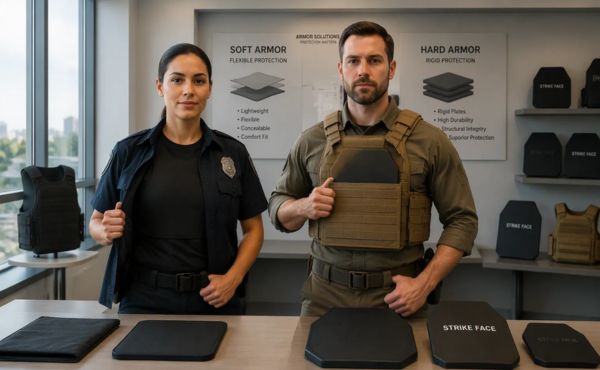
The National Institute of Justice sets the testing standards for body armor. An NIJ-compliant model has passed laboratory tests against specific threats at a specific rating level. The label tells the buyer which rounds the armor stopped in testing. That label is the only reliable proof of performance.
Buyers should confirm compliance for either armor type. A vest without a valid rating offers no verified protection, no matter how thick or heavy it feels. Check the model against the official NIJ compliant products list before purchase. A legitimate seller will state the rating level clearly and provide test documentation on request.
Sizing and Proper Fit
Fit follows the armor type. Soft body armor is sized like a vest, using chest and torso measurements. The panel should cover the vital organs and sit close to the body without riding up. A loose panel shifts during movement and leaves gaps in coverage. A tight panel restricts breathing and limits reach.
Hard armor is sized to plate dimensions. Plates come in standard sizes, and the carrier must match the plate. The plate should cover the heart and lungs while allowing the wearer to shoulder a rifle and bend freely. A plate that is too large limits motion. A plate that is too small leaves vital areas exposed. Wearers should test the fit in a full range of motion before relying on it.
Cost Considerations
Cost tracks materials and protection level. Soft vests sit in a lower cost tier. Flexible fiber panels cost less to produce than rifle-rated plates. Hard armor costs more, and Level IV plates typically cost more than Level III plates. Ceramic and polyethylene plates carry different price points within that range.
Price Ranges and Replacement Cycles
Exact prices vary by model, size, and seller, so buyers should compare quotes rather than assume a figure. Budget for the full setup, not just the panel. Carriers, plate pockets, and spall liners add to the total.
Replacement cycles depend on wear and the manufacturer’s warranty terms. Armor degrades over time from heat, moisture, and repeated impact. Follow the maker’s stated service life and inspect panels regularly for damage. A vest that has taken a serious hit should be evaluated or retired per the manufacturer’s guidance.
Conclusion
Soft body armor delivers flexible, concealable protection against handgun threats. Hard armor delivers rigid, rifle-rated protection for high-threat settings. Each design answers a different risk.
Choose by matching armor to your threat environment, your daily wear needs, and your budget. No single type wins for every wearer. A concealed vest suits long shifts and low-profile roles. A plate carrier suits tactical and patrol work where rifle rounds are a real concern.
Confirm NIJ compliance and a proper fit before you buy either type. A verified rating and a correct size turn a good design into reliable protection.
FAQ
Can soft body armor stop rifle rounds?
No. Soft body armor is tested only against handgun threats, and Level IIIA is its highest rating. Rifle rounds carry far more energy than flexible fiber can absorb. A wearer who faces rifle risk needs hard armor plates rated Level III or IV.
Is hard armor always the safer choice?
Not always. Hard armor stops rifle rounds, yet it adds weight and bulk that wearers feel over long hours. Soft armor covers handgun threats with far less fatigue. The safer choice depends on the threat a wearer actually expects to face.
How do I know which NIJ level I need?
Match the rating to the threat. Level II and IIIA soft armor covers handgun rounds. Level III and IV hard plates cover rifle rounds, with Level IV adding armor-piercing protection. Confirm the model on the official NIJ compliant products list before buying.
Can I wear soft armor and hard armor together?
Yes. Many wearers pair a concealable soft vest with a plate carrier staged for rifle threats. The soft panel handles all-day handgun protection. The plates add rifle-rated defense when a call demands it. This layered approach matches armor to the moment.
How long does body armor last?
Service life varies by maker and by wear conditions. Heat, moisture, and repeated impact all degrade armor over time. Follow the manufacturer’s stated service life, and inspect panels regularly. Retire any vest that has taken a serious hit, per the maker’s guidance.
Does hard armor fit differently than soft armor?
Yes. Soft armor is sized like a vest, using chest and torso measurements. Hard armor is sized to plate dimensions, and the carrier must match the plate. Test either fit through a full range of motion before you rely on it.
Can civilians buy body armor?
Yes, in most places. Buyers should check local laws first, since rules vary by location. Civilians should also match the rating to a realistic threat. Handgun threats dominate everyday scenarios, and a concealable soft vest suits that risk class well.