

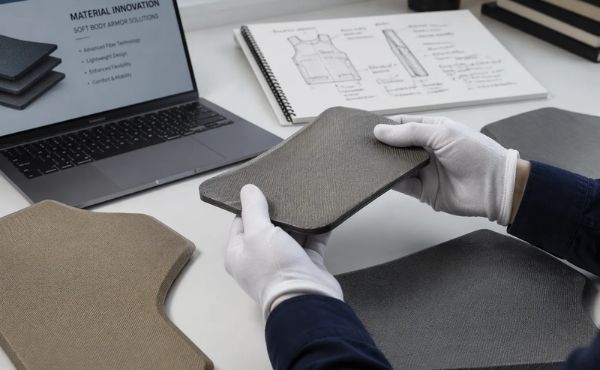
Soft body armor is flexible, concealable ballistic protection made from woven or laminated synthetic fibers such as aramid and UHMWPE, worn as a vest or undergarment. It bends with the body and hides under clothing. Hard armor uses rigid plates instead, covers less area, and stops rifle rounds that soft armor cannot.
Each design serves a different threat. This article explains how soft armor works, the NIJ protection levels, how long it lasts, the forms it comes in, who wears it, and the legal picture.
What Is Soft Body Armor?
A Simple Definition
Soft body armor is wearable ballistic protection built from flexible woven or laminated synthetic fibers. These fibers hold together under impact and absorb the energy of a bullet. The finished panel bends, folds, and drapes over the torso like heavy fabric.
Flexible Fiber Construction
Two fiber families dominate the market. Aramid fibers, such as Kevlar, are strong synthetic strands woven into fabric layers. UHMWPE fibers, such as Dyneema, are made from ultra-high-molecular-weight polyethylene and offer high strength at low weight. Manufacturers stack many thin layers of these materials. Some designs laminate the layers together; others stitch them into loose quilts. Each layer adds strength. The whole stack stays pliable because no rigid plate sits inside.
Worn Close to the Body
A soft vest sits directly against the torso, usually over a thin shirt. A carrier holds the ballistic panel in place. The panel must stay flat against the body for consistent soft armor protection. A loose fit lets the panel shift and leaves gaps. Good fit also spreads impact energy across a wider area. This close-to-body design is the reason soft armor hides easily under a uniform shirt or a jacket.
Soft Body Armor vs. Hard Body Armor
The difference between soft body armor and hard body armor comes down to construction and threat coverage. Hard armor uses rigid plates, often ceramic or polyethylene, held in a plate carrier. Soft armor uses pliable fiber layers. Each design fits a different job.
Flexibility and Concealability
Soft armor wins on wearability. It is lighter and thinner than a plate system, and it moves with the wearer through sitting, driving, and climbing stairs. A concealable vest disappears under a button-down shirt. Hard armor plates are bulky by design. They protect the vital organs of the chest and back, yet they announce themselves. Wearers accept that tradeoff when rifle threats are real.
Threat Coverage
Soft armor covers more of the torso than a plate. A typical vest wraps the chest, back, and sides. Hard plates cover a smaller frontal area but stop much harder projectiles. The table below summarizes the split.
| Feature | Soft Armor | Hard Armor |
|---|---|---|
| Construction | Pliable fiber layers | Rigid plates |
| Concealability | High | Low |
| Coverage | Broad torso wrap | Vital organs only |
| Primary threats | Handgun rounds | Rifle rounds |
Neither option is better in every case. The right choice depends on the ballistic threats a wearer expects to face.
Designed Limits
Soft armor has a defined job, and it performs that job well. Users should understand the edges of that job before they rely on it.
Rifle Threats and Blunt Force
Soft armor is not built to stop rifle rounds. A rifle bullet carries far more energy than a handgun bullet, and it can defeat a fiber-only panel. Rifle protection calls for hard armor with a rated plate. Soft armor also has limits against repeated blunt force. A vest absorbs one impact well, yet a sustained beating from a bat or a heavy fall can still injure the wearer. Hard armor handles blunt trauma better in those scenarios. The practical lesson is simple: match the armor to the threat. A security guard facing handguns gains little from a heavy plate. A soldier facing rifles needs the plate. Soft armor fills the wide middle ground of everyday ballistic protection, where handguns are the realistic concern.
How Soft Body Armor Works
A handgun bullet meets a soft armor panel the way a fastball meets a catcher’s mitt. The mitt gives, stretches, and holds the ball. The panel does the same with a bullet.
Core Materials
Modern soft armor relies on two fiber families. Each one traps energy in a different way, and each shapes how a vest feels on the body.
Aramid Fibers
Aramid fibers are long synthetic strands with very high tensile strength. They resist stretching under sudden load. Woven into fabric and stacked in layers, they form the core of many a soft armor panel.
These fibers also tolerate heat well. That trait matters during manufacturing and storage. Aramid layers stay flexible after lamination, so the finished vest bends with the torso. Aramid fibers anchor much of the soft body armor sold today.
UHMWPE Fibers
UHMWPE fibers come from ultra-high-molecular-weight polyethylene. They deliver high strength at low weight, which keeps a vest thin and comfortable. Lighter panels also reduce fatigue across a long shift.
The tradeoff is heat sensitivity. UHMWPE soft armor material loses strength at lower temperatures than aramid. Care instructions matter for these panels, and storage away from heat protects them.
Energy Dissipation
Fiber Capture and Spread
A bullet strikes the panel and meets a web of strong fibers. The fibers stretch and deform instead of breaking. They catch the projectile and spread its force sideways across the panel.
This capture happens in microseconds. The energy moves outward through the weave. Less energy reaches the body as a result, and the wearer feels a push rather than a puncture.
Layering and Areal Density
Manufacturers stack many thin layers to build stopping power. Areal density describes the mass of soft armor panels per unit of area. More layers raise areal density and absorb more energy.
Higher areal density also adds weight and stiffness. Designers balance the two. Soft armor technology aims for the lightest stack that still meets a rated threat level, and every added layer must earn its place.
Backface Deformation
Why Blunt Trauma Matters
Backface deformation is the bulge on the rear of a panel after an impact. The panel stops the bullet, yet residual energy pushes the fabric inward toward the wearer.
That bulge can bruise or injure tissue even with no penetration. Modern soft armor is tested for this depth limit. Soft armor technology treats blunt trauma as a real injury risk, not a footnote.
Ballistic protection therefore means two things: stopping the projectile and limiting the push behind it. Handgun rounds carry enough energy to make both matter. A vest that stops a bullet still owes the wearer a survivable impact.
Soft Armor Protection Levels
Protection levels give buyers a common language. They turn a vague question — “how much protection do I need?” — into a comparison against published test standards.
The NIJ Standard
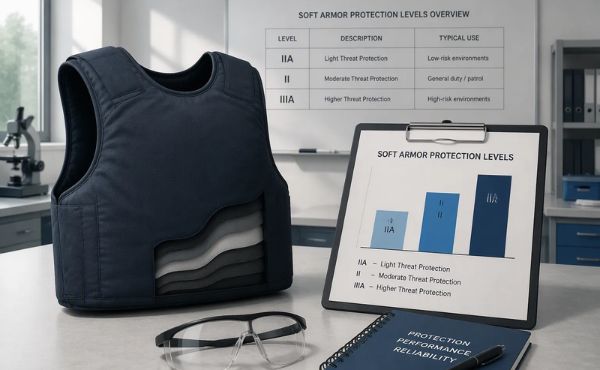
The National Institute of Justice publishes the body armor performance standards used across the United States. Five ballistic levels exist in total: IIA, II, IIIA, III, and IV. Soft armor covers the first three, all of which are handgun-rated. Levels III and IV require hard plates.
What Ratings Cover
A rating confirms that a specific model stopped specific test rounds under laboratory conditions. The National Institute of Justice tests each design against defined velocities and measures penetration through the panel. It also checks backface deformation, the rear bulge discussed earlier. A passing model earns certification at that level.
What They Do Not Cover
A rating says nothing about fit, coverage area, or wearer training. It also does not promise protection against every bullet in a class. Test rounds represent a sample, not a guarantee. Buyers should read a certification as a floor for performance, not a ceiling on risk.
Level IIA, II, and IIIA
The three soft armor ratings form a ladder. Each step stops more powerful handgun rounds than the one below it.
Handgun Threats by Level
Level IIA sits at the base. It handles common lower-energy handgun threats, such as standard-pressure rounds from shorter barrels. Level II adds stopping power for faster, heavier handgun rounds. Level IIIA tops the soft armor range. It is tested against the most powerful handgun cartridges in common use, including magnum loads. A higher rating generally means more layers, more weight, and a stiffer panel.
Side-by-Side Comparison
| Factor | Level IIA | Level II | Level IIIA |
|---|---|---|---|
| Handgun threats stopped | Entry-level handgun rounds | Mid-range handgun rounds | Most powerful handgun rounds |
| Application fit | Lightest, most flexible | Balanced everyday choice | Maximum soft armor protection |
| Regulatory compliance | NIJ-certified models available | NIJ-certified models available | NIJ-certified models available |
| Cost | Lowest | Moderate | Highest |
The table compares technical performance and practical fit only. Each level suits a different threat profile. A wearer facing standard handgun risks may find Level IIA sufficient. An officer who wants the widest margin within soft armor typically looks at Level IIIA.
Capabilities and Limits
Handgun-Only Protection
Every soft armor rating stops at the handgun line. None of the three levels is rated for rifle fire. A wearer who faces rifle threats needs hard armor plates, whatever soft armor rating sits underneath. This boundary is the single most important fact about soft armor protection. Buyers who ignore it may carry a vest that feels protective yet fails against the wrong projectile.
Fit and Coverage Factors
A certified panel only performs when it sits correctly. Coverage area matters as much as rating. A small panel leaves the sides and lower torso exposed. A loose carrier lets the soft armor panel shift during movement. Wearers should check that the vest covers the vital organs, stays flat against the torso, and allows full arm movement. A lower-rated vest that fits well can serve better than a higher-rated vest that rides up or gaps at the side.
Soft armor technology keeps improving, and current NIJ standards reflect years of testing refinement. Still, no rating replaces judgment. Match the protection level to the realistic ballistic threats of the job, then confirm the fit.
Lifespan and Care
Why Vests Expire
A soft armor vest does not last forever. Its protective fibers age from the day they are made, and performance slowly declines over time. A panel that passed certification when new may no longer meet that standard years later.
Material Degradation
Fibers lose strength through ordinary exposure. Sunlight, heat, moisture, and repeated flexing all take a toll. Aramid and UHMWPE layers degrade at different rates, and laminated panels can separate as adhesives age. The result is a slow loss of the energy absorption that makes soft armor work. Nothing visible needs to happen for this decline to occur.
Inspection Basics
Regular checks catch problems early. A wearer should inspect the panel and carrier on a set schedule, not only when something looks wrong.
Storage Conditions
Store the vest flat or hanging, never folded or compressed under heavy gear. Keep it away from direct sunlight, heat sources, and damp spaces. A cool, dry location slows fiber degradation and protects the panel between shifts.
Signs of Wear
Look for frayed edges, discolored fabric, stiff or cracked laminate, and loose stitching on the carrier. Check the panel for creases that stay in place after the vest is laid flat. Any of these signs deserves attention, and a damaged panel should come out of service.
When to Replace
Replacement timing depends on two clocks: the manufacturer’s stated service life and the vest’s actual history. A vest worn daily in heat ages faster than one stored in a climate-controlled locker.
Warranty vs. Real-World Use
Manufacturers publish warranty periods, and those dates mark the outer limit of expected performance. Real-world use can shorten that window. Heavy sweat, repeated washing of the carrier, and rough handling all accelerate wear. A wearer should treat the warranty date as a deadline, not a guarantee, and replace any panel that shows damage before that date arrives. Careful storage and routine inspection stretch the useful life of any ballistic panel and keep protection dependable.
Types of Soft Body Armor
Soft body armor comes in several forms. Each form changes how the vest hides, how much area it covers, and what gear it accepts. The right pick depends on the wearer’s daily routine.
Concealable Vests
A concealable vest tucks under clothing. The carrier is thin, and the soft armor panel sits flat against the torso. These vests suit anyone who needs protection without drawing attention.
Everyday Wear
Concealable designs favor comfort across a full day. Wearers can sit, drive, and climb stairs without the vest catching on objects. A proper fit keeps the panel from shifting under a shirt. Many wearers choose a lighter protection level here, since bulk defeats the purpose of hiding the vest.
Overt Carriers
Overt carriers sit outside the shirt. They look like tactical vests and often carry pouches, radios, and other gear. The carrier itself adds structure, and the ballistic panels slide into dedicated pockets.
Coverage and Accessories
Overt designs usually cover more of the torso than concealable ones. They accept external pouches, badge holders, and radio mounts. That added utility suits security staff and patrol officers who carry equipment on the vest. The tradeoff is visibility. An overt carrier signals that the wearer expects a threat.
Specialty Forms
Some wearers need protection that standard vests cannot provide. Specialty designs solve specific fit and coverage problems.
Undergarment-Style Designs
Undergarment-style vests integrate the soft armor panels into a shirt-like garment. The panels sit in sewn pockets against the body. This design spreads weight evenly and hides completely under a uniform. Wearers who stand for long shifts often prefer this style for its balanced feel.
Wrap-Around Designs
Wrap-around designs extend coverage to the sides and lower torso. The panel curves around the body instead of stopping at the chest. More coverage means more material and a bit more weight. Wearers who face side-angle threats accept that tradeoff. Soft armor technology makes these curved panels possible, since flexible fiber layers bend where rigid plates cannot.
Each form serves a distinct role. A concealed vest protects a plainclothes officer. An overt carrier equips a patrol shift. Specialty designs fill the gaps between them. Matching the form to the job keeps the wearer comfortable and properly covered.
Who Uses Soft Body Armor?
Law Enforcement
Duty and Off-Duty Use
Patrol officers form the largest group of soft armor wearers. A duty vest stays on through a full shift, so comfort and fit matter as much as the rating. Most departments issue a concealable carrier that sits under the uniform shirt. Officers often choose a high handgun rating for patrol work, since traffic stops and domestic calls carry unpredictable risk.
Off-duty wear adds a second layer of demand. A plainclothes vest must hide completely under civilian clothing. Many officers keep a separate, lighter vest for this purpose. Department policy usually sets the minimum rating, and individual officers decide whether to wear more. Soft armor suits both roles because it bends with the body and disappears under a jacket.
Security Professionals
Workplace Requirements
Security staff face a narrower threat profile than police. Most workplace incidents involve handguns, knives, or blunt force rather than rifles. That profile fits soft armor well. Guards at banks, hospitals, and retail sites often wear a concealable vest under a uniform shirt, and the vest stays comfortable across a standing shift.
Employer rules shape the choice. Some contracts require a certified vest and specify the minimum protection level. Others leave the decision to the guard. Overt carriers appear at sites where visible deterrence helps, such as event venues and transit hubs. A guard who carries a radio and a badge gains real utility from an overt carrier with pouches.
Civilian Owners
Common Ownership Reasons
Private citizens buy body armor for personal safety. Some live or work in high-crime areas. Others want a layer of protection during civil unrest or while traveling through unfamiliar regions. A concealable vest lets them wear protection without drawing attention.
Store owners, rideshare drivers, and firearms instructors make up a large share of civilian buyers. Each faces a different daily risk, and each needs a vest that fits that risk. A shop owner may prefer a light concealable panel. An instructor who spends hours at a range may want a higher ballistic rating. Civilians should confirm local law before they buy, since rules vary by state and city.
Soft Armor Legal and Buying Guide
Rules by Jurisdiction
Federal vs. State Limits
Federal law sets a baseline for body armor sales. It restricts purchase by anyone convicted of a violent felony. State rules go further, and they vary widely. Some states require a permit or a waiting period. Others limit online orders or ban possession outright in certain circumstances. A buyer should check state law and local ordinances before placing an order.
Shipping Restrictions
Retailers often refuse to ship soft body armor into states with strict rules. Some carriers apply their own limits as well. A buyer who orders across state lines should confirm the seller’s shipping policy first. A refused shipment wastes time and money.
Choosing the Right Soft Body Aror
Certification and Fit
Start with certification. Look for nij-certified soft body armor, meaning the model passed testing under the national institute of justice standards. Certification confirms tested performance, not comfort. Fit decides whether that performance reaches the wearer. The soft armor panel must sit flat against the torso and cover the vital organs. Check arm movement and side coverage before you commit.
Cost Considerations
Price tracks protection level and coverage area. A higher civilian-grade soft armor rating usually costs more, since it needs more fiber layers. Lighter materials and specialty cuts add cost too. Budget should follow the threat profile, not the other way around. A well-fitted mid-range vest serves better than an oversized top-tier one.
Safe Use and Storage
Proper Wear Practices
A vest only works when worn correctly. Follow these habits:
- Wear the carrier snug against the torso, with no gaps at the sides.
- Keep the panel flat and free of folds during wear.
- Inspect the panel after any impact and remove damaged armor from service.
- Store the vest flat or hanging, away from heat and sunlight.
Soft armor rewards consistent care. Proper wear and storage keep the ballistic layers sound and extend the vest’s useful life.
Conclusion
Soft body armor is flexible, concealable protection against handgun threats. Woven or laminated fibers catch a bullet and spread its energy across the panel. The NIJ protection levels give buyers a practical guide: Level IIA, Level II, and Level IIIA each match a different handgun risk.
Remember that every vest has a lifespan, and steady care keeps the ballistic layers sound. Choose by threat profile, fit, certification, and budget. Verify local laws before you buy any body armor, and replace worn soft armor on schedule.
Frequent Asked Questions
Does soft body armor stop rifle rounds?
No. Every soft armor rating stops at the handgun line. A rifle bullet carries far more energy than a fiber panel can absorb. Rifle protection requires hard armor plates rated for that threat. Wearers who face rifles should pair plates with their vest rather than rely on fibers alone.
Which protection levels apply to soft armor?
The national institute of justice publishes five ballistic levels. Soft armor covers three of them: IIA, II, and IIIA. Levels III and IV require rigid plates. Buyers should treat a rating as tested performance under lab conditions, not a promise against every bullet in a class.
Is level iiia the best choice for everyone?
Not necessarily. Level iiia stops the most powerful handgun rounds within the soft armor range, and it adds weight and stiffness. A wearer facing standard handgun risks may prefer the lighter Level II. Match the rating to the realistic threat, then confirm the fit.
How long does a vest last?
Manufacturers publish a service life, and that date marks the outer limit of expected performance. Heat, sunlight, moisture, and daily flexing all degrade the fibers. Replace any panel that shows fraying, stiff laminate, or permanent creases, even before the stated date.
Can I wear a vest every day?
Yes, provided it fits well. A snug carrier keeps the panel flat against the torso and spreads impact energy. Loose armor shifts and leaves gaps at the sides. Rotate between a concealable vest and a lighter option if long shifts cause fatigue.
Do I need a permit to buy body armor?
Rules vary by state and city. Federal law restricts purchase by anyone convicted of a violent felony, and some states add permits, waiting periods, or shipping limits. Check your state law and local ordinances before ordering, and confirm the seller ships to your address.
How do I know a vest is certified?
Look for a model tested under the national institute of justice standards, listed by level. Certification confirms tested performance, not comfort or coverage. Ask the seller for the model’s rating and test documentation, then verify the panel fits your torso before you rely on it.
Does a higher rating always mean better protection?
A higher rating stops harder handgun rounds, yet fit and coverage decide whether that performance reaches the wearer. A well-fitted mid-range vest can serve better than an oversized top-tier one. Weigh threat profile, fit, certification, and budget together.