

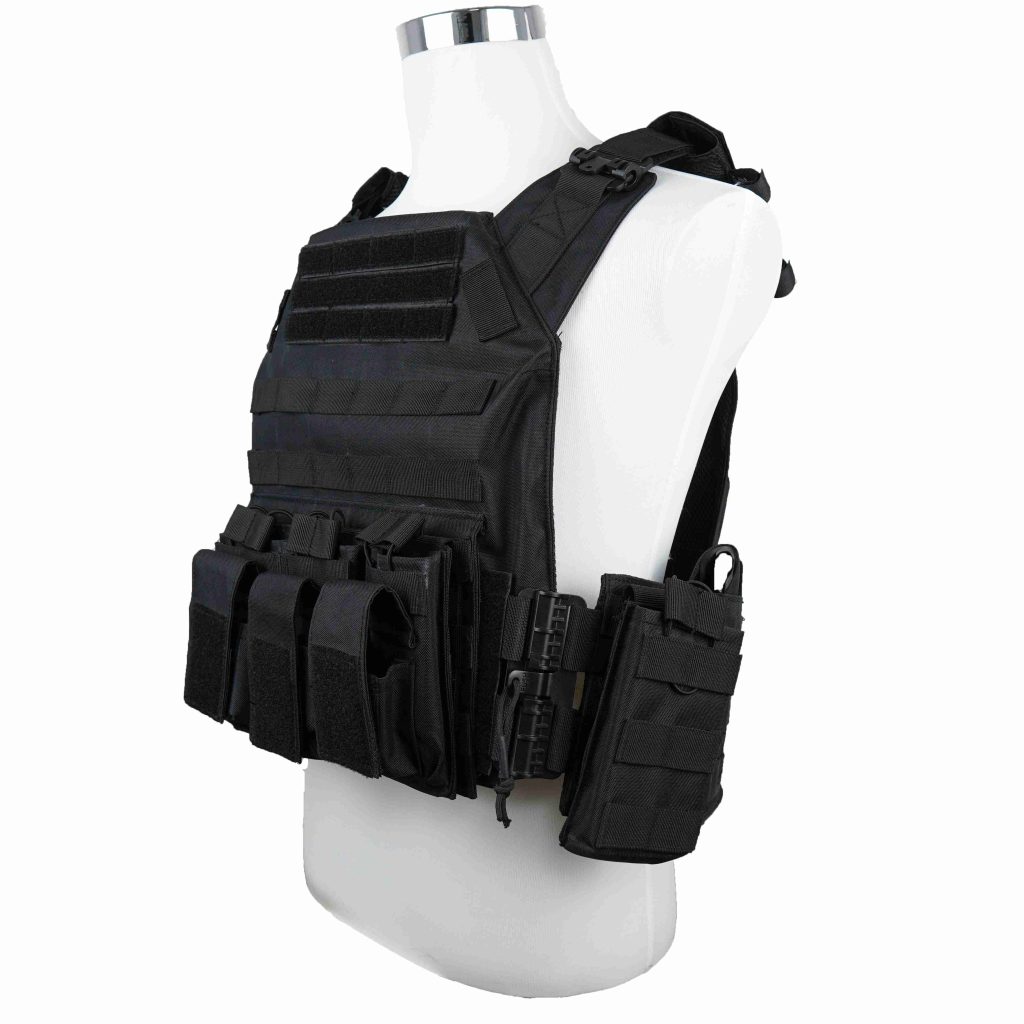
Bulletproof vests and stab-resistant vests address different threats. Ballistic vests are evaluated against specified firearm projectiles, while stab-resistant vests are evaluated against specified edged blades or spikes. Protection against one category does not establish protection against another. Buyers facing both firearm and stabbing risks need evidence for both capabilities in the exact armor configuration they intend to purchase.
For distributors, security companies and institutional procurement teams, the decision starts with threat requirements, then moves to coverage, fit, documentation and ongoing support. A material name or familiar protection label cannot answer all of those questions. The comparison below explains how to turn an initial product search into a clear purchasing specification.
Ballistic, Blade and Spike Protection
“Bulletproof vest” is the common search term, but “ballistic-resistant vest” describes the product more accurately. Its performance has limits defined by the ammunition, impact conditions and armor design used in testing.
Soft ballistic panels commonly use aramid or ultra-high-molecular-weight polyethylene fibers. Their construction distributes impact loads across layers. Rifle protection generally requires an appropriately tested rifle-resistant system, often incorporating hard plates; an ordinary handgun-rated soft vest should not be assumed to provide it.
Stab-resistant armor is designed to resist concentrated penetration from a blade or pointed instrument. Designs can incorporate specialized textiles, laminates, metallic components or combinations of materials. Material choice alone does not establish a rating.
Knife and spike protection also need separate attention. A panel evaluated against an edged blade may not have been evaluated against a narrow spike. Ask which protection class the evidence covers rather than treating “stab-resistant” as a complete threat description.[1][2]
| Armor category | Evidence to request | Unsupported assumption to avoid |
|---|---|---|
| Ballistic-resistant vest | Specified ammunition, standard, level and model | Handgun resistance also proves knife resistance |
| Edged-blade-resistant vest | Blade protection class and tested level | Blade resistance also proves spike resistance |
| Spike-resistant vest | Spike protection class and tested level | Spike resistance also proves ballistic protection |
| Combined-protection vest | Evidence covering each required category | One rating establishes every advertised capability |
Protection Ratings and Their Limits
Ballistic Ratings
Body armor documents may reference NIJ Standard 0101.06 or the newer NIJ Standard 0101.07 with the threat definitions in NIJ Standard 0123.00. The older framework uses levels such as II, IIIA, III and IV. The newer framework uses handgun designations HG1 and HG2, and rifle designations RF1, RF2 and RF3.[3]
Record the standard number and version alongside the level. A higher-looking number, “plus” suffix or generic “military grade” description is not a substitute for a defined test requirement. If additional ammunition matters, request evidence naming that projectile and its test conditions.
Stab Ratings
NIJ Standard 0115.00 distinguishes edged-blade and spike protection classes, with three protection levels. Its tests use controlled impact energies and defined penetration criteria. They do not guarantee resistance to every blade shape, attack angle or hand-delivered impact.[2]
A stab level and a ballistic level measure different performance. Stab Level 3 is not equivalent to ballistic Level III. Specifications that state only “Level 3 protection” leave a serious purchasing ambiguity.
Keep slash or cut resistance separate as well. A garment advertised as cut-resistant does not automatically qualify as stab-resistant. Request the applicable test method and result for the hazard being claimed, including whether the evidence concerns fabric samples or the finished armor panel.
Single-Threat and Combined-Protection Systems
A single-threat vest can suit a requirement limited to its verified protection category—after reviewing common soft armor panel mistakes. Combined-protection armor becomes relevant when the documented risk assessment includes both firearm and stabbing threats, or distinct blade and spike threats.
Do not assume that combining separately purchased panels creates an approved dual-threat system. Layer order, orientation, carrier capacity and panel movement can affect how the assembly behaves. The supplier should identify the intended configuration and provide evidence that supports its claims.
For example, a buyer may receive a ballistic panel certificate and a separate stab-panel report. Before approving the order, the buyer should establish whether the proposed carrier accommodates both panels correctly, which layer faces outward and what evidence applies to the assembled product. Two documents with different model identifiers do not resolve those questions by themselves.
For scalable purchasing, assign a distinct configuration identifier to each approved assembly. Keep its panel models, carrier model and instructions together. This makes later replenishment easier and reduces the chance of replacing one component with a visually similar alternative.
Coverage, Fit and Wearability
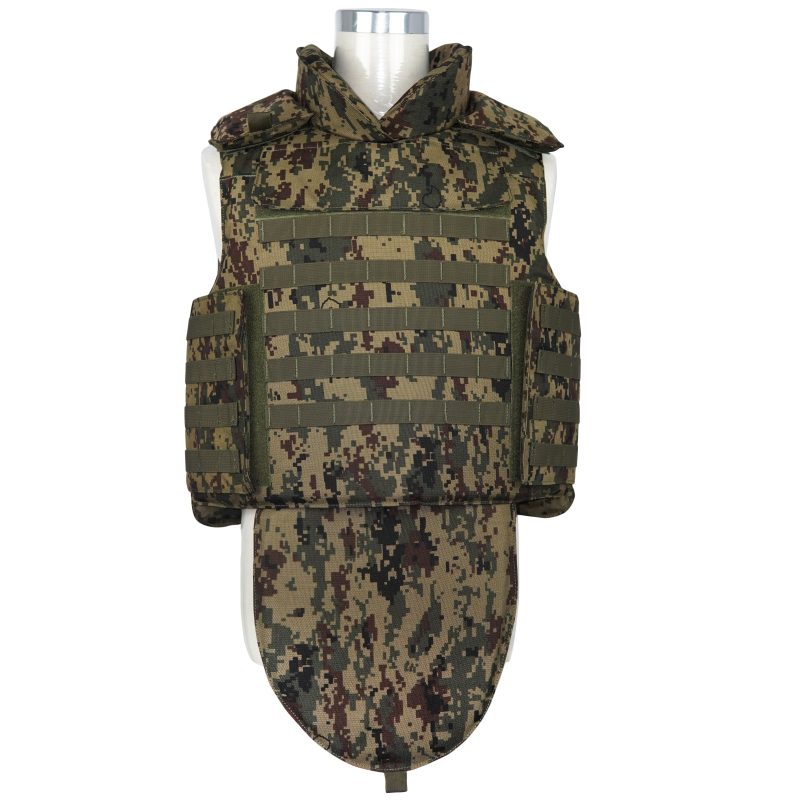
The carrier’s outline is not necessarily the protective outline. Pockets, straps and fabric extensions may contain no armor. Ask for drawings showing the protected areas of the front, rear and any side panels.
Check how that coverage changes across the ordered size range. Enlarging the carrier without changing panel dimensions may change adjustment range rather than protective area. Optional shoulder, neck or groin components require their own clearly stated protection claims.
Conduct wearer trials with representative body shapes using a clear bulletproof vest sizing approach and the clothing normally worn underneath. Check seated comfort, reaching, bending, panel stability and interaction with belts or other work equipment. Include shaped panel options where needed rather than assuming that strap adjustment can correct every fit problem.
Evaluate the complete vest weight in each relevant size. Comparing a bare panel from one supplier with a fully assembled vest from another produces a misleading result. Specify which panels, carriers and accessories are included in the stated weight.
Thickness, stiffness and heat burden also affect acceptance. Record wearer feedback using the same tasks and trial conditions for each candidate. A product that meets the required threat specification still needs to fit the workforce and remain practical throughout its intended wear period.
Model-Specific Evidence and Supplier Verification
Separate independent testing from bulletproof vest certification. A laboratory report can describe the performance of submitted samples. NIJ certification involves the relevant compliance program and a model-specific listing; it is not a blanket approval of every product from a factory.[4]
Verify that the offered model, panel labels, report and applicable listing agree. Resolve differences in model names, materials, panel shape or configuration before accepting the evidence. A company quality-management certificate does not establish ballistic or stab performance.
For combined armor, check the documentation supporting every required protection category. Confirm the laboratory’s relevant scope and whether the report covers the complete standard or a limited test arrangement. A short demonstration video cannot replace those records.
Include traceability in the order: model identifiers, production references, labels and inspection records should let you connect delivered units to the approved specification. Require advance review of substitutions that could change protection, fit or the configuration supported by testing.
A Practical Purchasing Specification
Prepare a requirement sheet before requesting samples. At minimum, record:
- Required ballistic ammunition and standard, where applicable.
- Required edged-blade and spike protection classes and levels.
- Approved panel and carrier configuration, including orientation.
- Protected areas, size distribution and maximum complete-system weight.
- Required certification or test evidence and model identification.
- Cleaning instructions, warranty terms and replacement support.
Use sample trials to resolve fit and configuration questions before finalizing the size mix. At delivery, check labels, dimensions, assembly and condition against the approved reference. Visual acceptance checks confirm supplied details; they do not prove protective performance.
Compare ownership costs using the same scope. Include spare carriers, replacement panels, sizing support and handling requirements. A lower unit price may offer little value if the supplied configuration does not meet the original specification or replacement components cannot be reliably identified.
Conclusion
Choose bulletproof vest options or stab-resistant vests by the threats supported in the product’s evidence, then verify coverage, fit and the complete configuration. Where several threat categories matter, specify each one explicitly. Model-specific documentation, representative wearer trials and clear component controls turn a broad vest comparison into a purchasing decision that suppliers can answer consistently.