

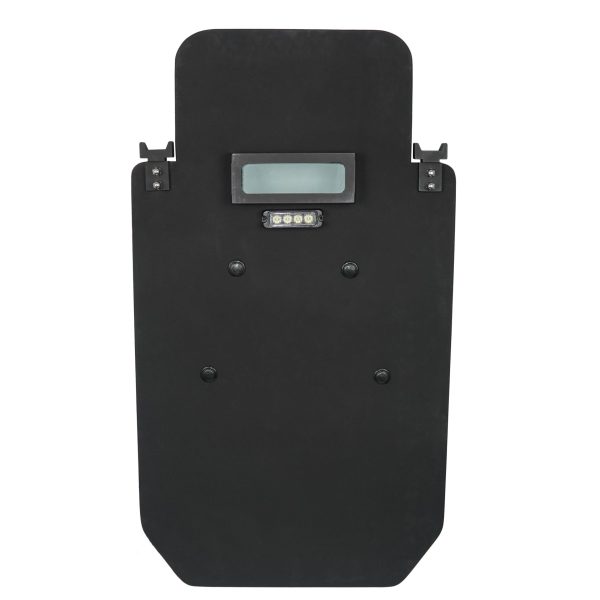
Ballistic shield selection starts with verified protection against the required ammunition, followed by usable coverage and a complete-system weight that users can manage when comparing NIJ Level III ballistic shields. The correct choice depends on the finished shield assembly, including any viewport, handles, fasteners and accessories. A protection label or low panel weight alone cannot establish whether the product meets a procurement requirement.
For institutional buyers and equipment distributors, a useful comparison must connect three things: the threat specification, the evidence for the offered model and its practical handling characteristics. This guide explains how to compare those elements without assuming that every shield carrying the same marketing rating performs or handles identically.
Threat Requirements and Protection Evidence
Define the ammunition requiring protection before comparing shield materials or dimensions. Caliber alone is insufficient: projectile construction, mass and test velocity can affect the result. A handgun-rated shield should not be substituted for a rifle-rated requirement because it is easier to carry; map threats to published body armor protection levels first.
Ask the supplier to identify the standard or test method, its edition, the specified threat set and the exact shield model evaluated. Where special-threat claims are made, request the corresponding report rather than inferring them from a familiar level designation.
Distinguish shield testing from torso-armor certification. NIJ Standard 0101.07 addresses body armor; a shield advertised using an NIJ-related threat label is not thereby an NIJ-certified body armor product. The NIJ compliance program’s ballistic certification scope is law-enforcement body armor, not a general approval scheme for shields.[1]
Shield-specific documents include ASTM E3141/E3141M, a ballistic test method, and ASTM E3347/E3347M, a shield performance specification. The latter addresses components and locations such as the body, edges, viewports, fasteners and weak points. State the required edition in the purchase specification and confirm which document the evidence actually covers.[2][3]
Complete Shield Construction
Body, Edges and Connections
Evidence from a flat material sample does not establish the performance of an assembled shield. Curves, cutouts, joints, fasteners and edge details introduce features absent from a simple sample. Request evidence representative of the finished model and its intended configuration.
Multi-panel or folding products need particular attention to connections and overlaps. Establish how they are secured in their protective configuration and whether the documentation covers that arrangement. A transport configuration should not be treated as equivalent to the evaluated protective configuration.
Viewports and Attachments
A viewport adds visibility but also changes the assembly. Confirm the evidence for the window and its integration with the frame or shield body. Do not assume that the transparent section has the same demonstrated performance as the opaque panel.
Evaluate optical clarity, distortion, viewing position and cleaning requirements on the actual sample. Scratches or clouding may affect usability even when the shield’s external dimensions remain unchanged.
Lights, brackets and other accessories add weight and attachment points. Identify approved options and avoid modifications that alter the tested structure. An accessory mounted after evaluation should not silently become part of an unchanged protection claim.
Usable Coverage and Shield Geometry
Compare protected geometry rather than height and width alone. Tapered corners, curved sides and cutouts can create different outlines between shields with similar overall dimensions. Ask for a drawing that distinguishes external size from the area supported by protection evidence.
A rectangular area calculation is useful for an initial dimensional comparison, but it can overstate coverage when a shield has substantial cutouts. It also says nothing about whether a particular user can maintain the intended protective position.
Review the product with representative users wearing their normal protective equipment. Observe visibility, comfortable positioning and whether the shield can be managed through the spaces relevant to its intended use. Larger coverage may introduce handling or storage constraints; smaller dimensions may leave more of the user exposed.
For an order covering multiple roles, consider whether one configuration can meet all documented requirements. A single standard model simplifies inventory, but that administrative benefit should not override a material difference in coverage or handling needs.
Weight, Balance and Handling
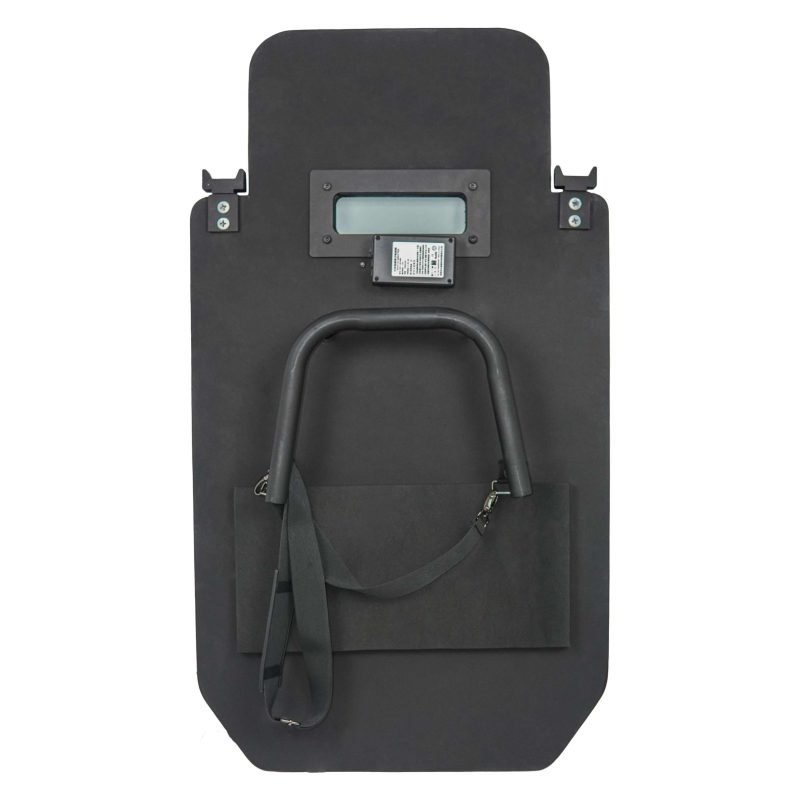
Specify the weight of the complete shield in its ordered configuration. Bare-panel figures may exclude the viewport, grip system, forearm support, lights or other components. Those exclusions can distort comparisons between suppliers.
Weight distribution matters alongside total mass. Grip position and the location of heavier components affect the effort needed to keep the shield stable. Two shields with similar weights can feel different during the same handling trial.
Use consistent trials for candidate models. Include sustained holding, controlled repositioning, carrying and transition into the approved storage arrangement. Record discomfort, visibility and user feedback, together with the accessories fitted during evaluation. Representative trials should be organized by the buyer’s qualified personnel.
Inspect grip clearance with gloves, forearm support adjustment and suitability for the required users. If the supplier offers a harness or wheeled support, evaluate the complete arrangement and its space requirements. A support system changes how weight is managed; it does not remove the need to assess coverage and configuration.
Materials and Durability
Material descriptions help explain design choices but do not replace finished-product evidence. Polyethylene composites, aramid composites, ceramics and metals may be used in different shields or hybrid structures. Performance depends on the complete construction and test conditions.
Compare material options against the same threat requirement and coverage target. A lightweight handgun shield and a heavier rifle shield are not equivalent alternatives merely because both use advanced composites.
Request documented operating, storage and cleaning limits. Covers, adhesives, transparent sections and fittings may impose constraints different from those of the main armor material. Avoid treating resistance to moisture or chemicals as a claim that the entire assembly tolerates unrestricted exposure.
Ask how impacts, drops, damaged edges, loose fittings or cracked viewports should be handled. A visual check cannot establish that a damaged shield retains its protective performance. The order should include clear inspection, quarantine and supplier-review procedures rather than an unsupported promise of permanent durability.
Procurement and Acceptance Criteria
Use a comparison sheet that makes differences visible before approving samples, as in a broader law enforcement ballistic procurement guide:
| Purchasing item | Information to record |
|---|---|
| Protection | Exact test threats, method or specification, edition and model |
| Configuration | Viewport, handle system, support arrangement and accessories |
| Geometry | External dimensions, protective outline and relevant cutouts |
| Weight | Complete ordered weight and stated measurement tolerance |
| Evidence | Report identification, tested construction and any limitations |
| Support | Care instructions, warranty scope, approved replacement parts |
Retain the accepted sample or a sufficiently detailed controlled reference. Record the model, drawings and configuration so that a changed handle, viewport or construction cannot be accepted as an undocumented substitute.
At delivery, check identification, dimensions, complete weight, fittings and visible condition against the approved specification. Confirm that all required documents accompany the supplied model. These checks establish conformity to the order; they do not replace ballistic evaluation.
Separate requirements for a ballistic shield from those for an impact or riot shield. Appearance and transparency alone cannot establish firearm protection. Where a procurement request uses “protective shield” broadly, clarify the required hazard before suppliers submit alternatives.
Conclusion
Select ballistic shields by matching the required threats to model-specific evidence, then compare usable coverage and complete-system handling. Related product context appears in H WIN coverage of ultimate protection bulletproof shields. Treat windows, edges, connections and accessories as parts of the purchasing decision. A controlled specification, consistent sample evaluation and documented acceptance process provide a stronger basis for procurement than a rating, material name or weight figure considered alone.