

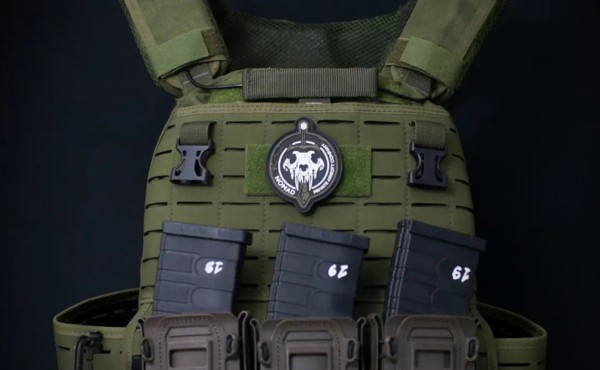
Concealable body armor is designed for discreet protection beneath clothing, while tactical body armor features an external carrier that supports ballistic plates, additional armor components and mission equipment.
Both configurations serve professional protection requirements, with their ballistic performance determined by the specific armor materials, protection ratings and tested configurations. Understanding these differences helps law enforcement officers, security professionals and tactical personnel select suitable body armor for their working environments.
Concealable Body Armor: Design and Key Features
Concealable body armor is designed to provide ballistic protection beneath everyday clothing or uniforms. Its low-profile construction keeps the armor close to the torso, allowing users to maintain a discreet appearance during professional duties.
Most concealable body armor systems use flexible soft armor panels housed inside a fitted carrier. These panels are commonly manufactured using high-strength ballistic fibers, including aramid and ultra-high-molecular-weight polyethylene (UHMWPE). Multiple layers of these materials form a flexible structure designed to absorb and distribute projectile impact energy.
Key design features include:
-
Low-profile construction: Slim carriers and closely fitted armor panels support discreet wear beneath shirts, jackets and uniforms.
-
Flexible soft armor: Lightweight ballistic materials follow the body’s contours and support natural movement.
-
Torso protection: Front, back and optional side panels provide coverage according to the selected vest design.
-
Adjustable fit: Shoulder straps and waist closures help maintain proper armor positioning.
-
Extended-wear comfort: Breathable carrier materials and flexible panels support prolonged daily use.
Concealable bulletproof vests are widely used by plainclothes police officers, detectives, undercover personnel and executive protection professionals. These users often require ballistic protection alongside a professional appearance during routine duties, public interactions and investigative assignments.
The main design priority is combining discreet wear, suitable ballistic protection and comfortable movement throughout the working day.
Tactical Body Armor: Construction and Key Features
Tactical body armor uses an external carrier designed to accommodate ballistic protection and mission-specific equipment. Its visible configuration provides space for hard armor plates, soft armor inserts, identification panels and modular attachments.
A typical tactical body armor vest consists of an outer carrier, front and rear armor compartments, adjustable shoulder straps and a waist adjustment system. Depending on the model, additional components can include side plate pockets, cummerbunds and modular attachment platforms.
Important construction features include:
-
External carrier: A durable textile structure supports the armor components and equipment attachments.
-
Hard armor plate compartments: Dedicated pockets accommodate compatible front and rear ballistic plates.
-
Modular attachment systems: MOLLE webbing and other attachment interfaces support radios, magazine pouches, medical kits and utility equipment.
-
Expandable coverage: Optional side plates and additional protective components extend the armor configuration.
-
Adjustable structure: Shoulder and waist adjustments help accommodate different body sizes and equipment loads.
Tactical armor carriers commonly use durable materials such as nylon fabrics, with construction specifications varying by manufacturer and application.
These systems are widely used by tactical law enforcement teams, military personnel and security professionals involved in assignments requiring external armor and integrated equipment.
The main design priorities are armor compatibility, equipment organization, operational flexibility and coverage configuration.
Key Differences Between Concealable and Tactical Body Armor
The main differences between concealable and tactical body armor involve their wearing profiles, carrier construction, armor configurations and intended applications.
| Comparison Factor | Concealable Body Armor | Tactical Body Armor |
|---|---|---|
| Wearing Style | Under clothing | Over clothing |
| Design | Low-profile and discreet | External and modular |
| Carrier | Fitted internal-style carrier | External tactical carrier |
| Armor Configuration | Commonly flexible soft armor | Soft armor, hard plates or combined systems |
| Coverage | Front, back and optional sides | Front, back, sides and optional extended coverage |
| Weight | Generally lighter | Depends on armor plates and accessories |
| Equipment Integration | Minimal external attachments | MOLLE and modular equipment attachments |
| Mobility | Designed for everyday movement | Configured around operational requirements |
| Typical Users | Plainclothes officers and security personnel | Tactical teams and military personnel |
| Main Application | Discreet daily protection | Tactical and high-risk operations |
Wearing profile and appearance
Concealable armor sits beneath clothing and maintains a relatively smooth exterior profile. Tactical body armor uses an external carrier, making its protective components and equipment attachments accessible during operations.
Armor construction and coverage
Concealable systems commonly use flexible ballistic panels. Tactical systems can combine soft armor and rigid ballistic plates, with optional side protection and other coverage components.
Weight and mobility
Concealable systems generally prioritize flexibility and manageable weight for extended wear. Tactical systems accommodate additional armor and equipment, with total weight varying according to the selected plates, accessories and coverage.
Equipment integration
Concealable vests focus on ballistic protection within a streamlined design. Tactical carriers provide attachment points for communication devices, medical equipment, magazines and other operational accessories.
These differences make each configuration suitable for distinct professional requirements.

Ballistic Protection Levels and Armor Configurations
Ballistic protection is determined by the materials, construction and tested performance of the armor components. Concealable and tactical body armor can incorporate different protective materials depending on their intended threat coverage.
Understanding the distinction between soft armor and hard armor is essential when comparing these systems.
Soft Armor and Handgun Protection
Soft armor consists of flexible ballistic panels made from multiple layers of high-strength fibers, such as aramid and UHMWPE.
These materials are designed to capture and distribute the energy of specified handgun projectiles through their layered construction.
Soft armor is commonly used in concealable body armor because its flexible structure supports close-fitting designs and extended wear.
Typical characteristics include:
-
Flexible textile construction
-
Lightweight protective panels
-
Compatibility with concealable and external carriers
-
Protection against specified handgun threats
The actual protection level depends on the tested armor model and its certification.
Hard Armor Plates and Rifle Protection
Hard armor plates use rigid ballistic materials to provide protection against specified rifle threats.
Common plate materials include:
-
Ceramic composites: Combine ceramic strike faces with supporting backing materials to manage projectile impact.
-
Ultra-high-molecular-weight polyethylene: Uses high-strength polymer layers to provide rigid ballistic protection with relatively low weight.
-
Steel: Uses hardened ballistic steel with protective surface treatments and manufacturer-specific construction.
Hard armor plates are commonly integrated into tactical body armor through dedicated front, rear and side compartments.
Plate specifications vary by material, thickness, dimensions, weight and ballistic protection rating.
NIJ Body Armor Protection Levels
The National Institute of Justice (NIJ) provides standardized ballistic testing requirements for body armor used by U.S. law enforcement.
Under NIJ Standard 0101.07 and the associated NIJ Standard 0123.00, ballistic protection levels include:
| NIJ Protection Level | Armor Category | General Threat Classification |
|---|---|---|
| HG1 | Handgun | Specified handgun threats |
| HG2 | Handgun | Higher handgun threat classification |
| RF1 | Rifle | Specified rifle threats |
| RF2 | Rifle | Additional rifle threat classification |
| RF3 | Rifle | Higher rifle threat classification |
The HG classifications apply to soft armor testing, while RF classifications apply to hard armor testing.
Another important distinction is between stand-alone and in-conjunction (ICW) plates. Stand-alone plates achieve their specified protection independently, while ICW plates are tested with a designated soft armor configuration.
For professional users, the relevant protection level should match the expected ballistic threats and the complete armor configuration.
Advantages of Concealable and Tactical Body Armor
Each body armor configuration offers advantages based on its design priorities and operational requirements.
Advantages of Concealable Body Armor
Discreet Professional Appearance
The low-profile design allows users to wear ballistic protection beneath everyday clothing and uniforms. This is particularly valuable for plainclothes officers, investigators and executive protection personnel.
Flexible Construction
Soft ballistic panels follow the body’s contours, supporting natural movement during walking, driving, sitting and other daily activities.
Comfortable Extended Wear
Lightweight materials and fitted carriers help reduce unnecessary bulk during long working shifts.
Convenient Daily Use
The streamlined configuration integrates easily into routine professional clothing and daily security assignments.
Advantages of Tactical Body Armor
Hard Armor Integration
Dedicated plate compartments support compatible ballistic plates for specified rifle-threat protection.
Modular Equipment Configuration
MOLLE webbing and attachment systems allow users to organize radios, medical kits, magazine pouches and other operational equipment.
Expandable Protection Coverage
Compatible side plates and additional protective components allow the armor system to accommodate different coverage requirements.
Operational Flexibility
Adjustable carriers and interchangeable components support different equipment arrangements and mission requirements.
Applications of Concealable and Tactical Body Armor
The intended working environment is one of the most important factors when selecting between concealable and tactical body armor.
| Application | Recommended Configuration | Main Requirement |
|---|---|---|
| Plainclothes Law Enforcement | Concealable | Discreet protection |
| Undercover Operations | Concealable | Low-profile appearance |
| Executive Protection | Concealable or specialized tactical | Discretion and threat-based protection |
| Routine Police Patrol | Concealable or external armor | Daily comfort and duty requirements |
| Tactical Police Teams | Tactical | Plate compatibility and equipment integration |
| Military Operations | Tactical | Mission-specific armor and equipment configuration |
Plainclothes and Undercover Operations
Concealable body armor is suitable for assignments where personnel work in civilian clothing. Detectives, undercover officers and investigative teams can maintain a professional appearance while wearing ballistic protection.
Executive Protection
Executive protection personnel often work in public environments, corporate settings and private events. Concealable configurations support discreet protection, while specialized external systems can accommodate additional operational equipment when required.
Routine Law Enforcement Duties
Police officers may use concealable or external body armor according to their uniform policy, duty environment and required protection. Soft armor configurations are commonly selected for daily wear, with external carriers offering additional equipment integration.
Tactical and Military Operations
Tactical teams and military personnel frequently use external armor systems that accommodate hard plates, communication devices and mission equipment. The configuration can be adapted according to threat assessments, operational duration and coverage requirements.
Choosing Between Concealable and Tactical Body Armor
The choice between concealable and tactical body armor depends on the operational environment, required ballistic protection and equipment needs.
Choose Concealable Body Armor for:
-
Plainclothes law enforcement officers who need protection beneath everyday clothing.
-
Undercover personnel who require a discreet appearance during investigative assignments.
-
Executive protection professionals working in corporate settings, public venues and private events.
-
Security personnel who prioritize lightweight construction, flexibility and extended wear.
Choose Tactical Body Armor for:
-
Tactical law enforcement teams requiring hard armor plate compatibility.
-
Military personnel needing modular armor configurations for mission-specific equipment.
-
High-risk security operations requiring additional ballistic coverage.
-
Professional users who need integrated equipment attachments for radios, medical kits and other duty gear.
Key selection considerations
| Operational Requirement | Suitable Configuration |
|---|---|
| Discreet protection under clothing | Concealable |
| Flexible soft armor for daily wear | Concealable |
| External hard armor plates | Tactical |
| MOLLE equipment integration | Tactical |
| Modular front, rear and side protection | Tactical |
| Low-profile professional appearance | Concealable |
The final configuration should also match the expected ballistic threats. For example, rifle-threat protection requires appropriately rated hard armor, whether integrated into a tactical carrier or a compatible specialized low-profile system.
Frequently Asked Questions
Can Concealable Body Armor Stop Rifle Rounds?
Concealable body armor commonly uses soft ballistic panels designed for specified handgun threats. Rifle protection requires armor components tested for the relevant rifle threats, such as compatible hard armor plates.
Is Tactical Body Armor Stronger Than Concealable Body Armor?
Tactical body armor frequently accommodates hard armor plates for rifle protection. Concealable systems commonly use soft armor for handgun protection. Actual ballistic performance depends on the specific armor model and its tested protection level.
Can Tactical Body Armor Be Worn Under Clothing?
Tactical body armor is designed primarily for external wear. Its carrier structure, plate compartments and equipment attachments support an overt configuration. Specialized low-profile carriers can accommodate selected armor components beneath suitable outer clothing.
Is Concealable Body Armor Lighter Than Tactical Body Armor?
Concealable body armor generally weighs less because it commonly uses flexible soft armor panels and a streamlined carrier. Tactical systems often carry additional hard plates, side protection and equipment, increasing the complete system weight.
What Type of Body Armor Is Best for Law Enforcement?
The appropriate configuration depends on the officer’s assignment. Concealable armor suits plainclothes investigations and discreet daily duties, while tactical armor supports assignments requiring hard plates, modular equipment and expanded coverage.
Conclusion
Concealable vs tactical body armor comes down to wearing style, armor configuration, protection requirements and operational applications. Concealable systems prioritize discreet wear, flexibility and daily comfort, while tactical systems provide external carriers, hard armor compatibility and modular equipment integration. Understanding these differences helps law enforcement agencies and security professionals select body armor that matches their operational requirements and ballistic protection needs.