

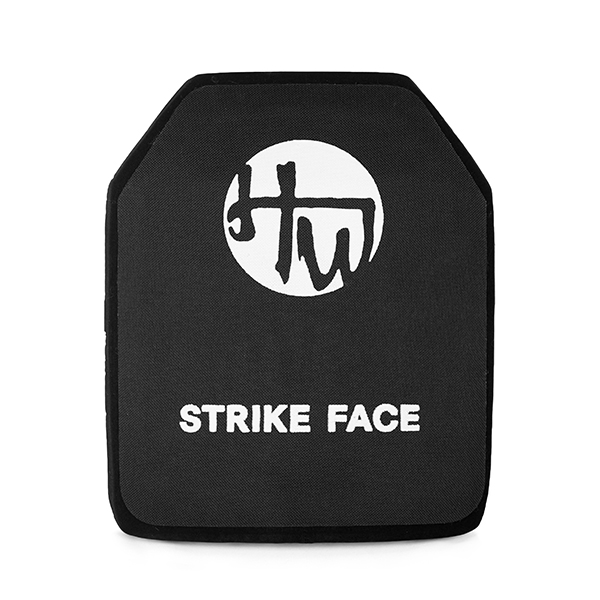
NIJ Level IIIA body armor is a type of soft ballistic armor designed to protect the torso against specified handgun threats. Under NIJ Standard 0101.06, this protection level is tested against .357 SIG and .44 Magnum ammunition under controlled laboratory conditions. It is commonly used in concealable ballistic vests for law enforcement, security personnel, and other users who require handgun protection without the bulk of rigid armor plates.
Level IIIA represents the highest handgun protection classification under the older NIJ 0101.06 standard. Its flexible construction makes it suitable for everyday wear, although it does not provide the rifle protection associated with higher hard-armor classifications. Understanding its materials, testing requirements, and certification status helps buyers evaluate whether this type of body armor meets their protection requirements.
What Is NIJ Level IIIA Body Armor?
NIJ Level IIIA body armor is soft ballistic armor designed to resist specific handgun ammunition. It typically consists of flexible ballistic panels made from multiple layers of high-strength fibers, enclosed in a protective carrier.
Common ballistic materials include:
- Aramid fibers: High-strength synthetic fibers used in woven or laminated ballistic structures. They provide tensile strength and energy absorption while maintaining flexibility.
- Ultra-High-Molecular-Weight Polyethylene (UHMWPE): A lightweight, high-strength polymer used in unidirectional or laminated ballistic composites. It offers a favorable strength-to-weight ratio.
The actual ballistic performance depends on the complete panel construction, including fiber properties, layer arrangement, manufacturing quality, and testing results. The material name alone does not establish an armor protection rating.
Unlike hard armor plates, Level IIIA panels are flexible and can conform to the wearer’s torso. They are commonly incorporated into concealed vests, overt tactical carriers, and other soft armor systems.
What Does Level IIIA Mean?
The IIIA designation comes from NIJ Standard 0101.06, which classifies body armor according to its tested ballistic resistance.
Under this standard, Level IIIA armor is tested against two specified handgun threats:
- .357 SIG FMJ Flat Nose ammunition.
- .44 Magnum Semi-Jacketed Hollow Point ammunition.
The armor must meet the standard’s penetration and backface deformation requirements under prescribed testing conditions. Passing these tests establishes compliance with the defined performance level, not protection against every handgun cartridge or ammunition configuration.
What Does NIJ Level IIIA Body Armor Stop?
NIJ Level IIIA body armor is designed for specified handgun threats. Its performance is evaluated against the ammunition, projectile characteristics, and reference velocities defined by the applicable NIJ standard.
Standard Test Threats
Under NIJ Standard 0101.06, the two reference threats are .357 SIG and .44 Magnum. These provide the benchmark for evaluating the armor’s ballistic resistance.
A compliant panel must prevent complete projectile penetration and meet the standard’s backface deformation limits. These requirements help assess both projectile resistance and the deformation transmitted toward the wearer’s body.
The test protocol also includes conditioning procedures and prescribed shot patterns. This means the armor is evaluated under controlled conditions rather than simply being tested as a new, unused panel.
Understanding Protection Limitations
A Level IIIA rating should not be interpreted as a guarantee against every handgun threat.
Actual performance can vary with ammunition type, projectile construction, impact conditions, panel condition, and other factors. Armor that passes the standard’s specified tests has demonstrated compliance with those test requirements, not universal protection against all ammunition.
Level IIIA soft armor is also not designed to provide rifle protection. Users who require protection against rifle threats need to evaluate armor tested to the appropriate rifle protection level.
How Does Level IIIA Body Armor Work?
Soft body armor uses multiple layers of high-strength ballistic materials to resist projectile penetration.
When a projectile strikes the panel, the fibers interact with the impact and distribute the applied force across a larger area. The material structure resists stretching and rupture, helping prevent the projectile from passing through the panel.
Several factors influence this performance:
Fiber strength and construction
Aramid and UHMWPE fibers have different mechanical properties. Their strength, flexibility, and structural arrangement influence the overall performance of a ballistic panel.
Layer arrangement
The number of layers, fiber orientation, and bonding or weaving methods affect how the panel responds to impact. A greater number of layers does not automatically guarantee better protection.
Panel design and manufacturing
Panel dimensions, edge construction, sealing, and production consistency all contribute to the finished product’s performance. The complete armor model must be evaluated rather than relying on individual material specifications.
Backface deformation
Stopping a projectile does not eliminate the impact transferred to the wearer. NIJ testing therefore measures backface deformation to evaluate how far the rear surface of the armor moves into the backing material.
This is an important distinction: ballistic resistance and blunt-force injury risk are related but separate considerations.
NIJ Body Armor Protection Levels Explained
NIJ protection levels classify body armor according to its tested resistance to specified ballistic threats. The familiar IIA, II, IIIA, III, and IV designations belong to the older NIJ 0101.06 classification system.
| NIJ 0101.06 Level | Armor Type | General Threat Category |
|---|---|---|
| Level IIA | Soft armor | Specified lower-energy handgun threats |
| Level II | Soft armor | Specified handgun threats |
| Level IIIA | Soft armor | .357 SIG and .44 Magnum |
| Level III | Hard armor | Specified rifle threats |
| Level IV | Hard armor | Specified armor-piercing rifle threat |
These levels represent different test requirements rather than a universal ranking for every possible firearm threat.
Level IIA, Level II, and Level IIIA are soft armor classifications. Level III and Level IV generally involve rigid armor plates designed for rifle threats.
The appropriate choice depends on the intended application, required ballistic protection, mobility, and the conditions under which the armor will be worn.

Level II vs. Level IIIA vs. Level III Body Armor
Level II, Level IIIA, and Level III body armor differ in their protection requirements, construction, and typical applications.
| Comparison | Level II | Level IIIA | Level III |
|---|---|---|---|
| Armor construction | Soft panels | Soft panels | Hard plates |
| Protection category | Handgun | Handgun | Rifle |
| Concealability | High | High | Lower |
| Flexibility | Flexible | Flexible | Rigid |
| Typical applications | Concealed wear | Concealed and overt wear | Rifle-threat environments |
Level II vs. Level IIIA
Both Level II and Level IIIA use soft ballistic panels. Their main difference is the level of handgun protection required by the applicable standard.
Level IIIA is tested against more demanding handgun threats under NIJ 0101.06. Buyers should compare the certified models, panel construction, weight, and coverage area rather than assuming that every Level IIIA vest has the same dimensions or comfort.
Level IIIA vs. Level III
The primary difference is the intended ballistic threat category.
Level IIIA is soft armor designed for specified handgun threats. Level III uses hard armor plates tested against specified rifle threats under NIJ 0101.06.
Hard plates are rigid and generally add weight and bulk compared with flexible soft armor. The two categories serve different protection requirements and should not be treated as interchangeable.
NIJ 0101.06 vs. 0101.07: What Changed?
NIJ introduced Standard 0101.07 to update the testing requirements for ballistic-resistant body armor. The newer standard works alongside NIJ Standard 0123.00, which defines the ballistic protection levels and associated test threats.
One important change is the protection-level naming system.
| Former Classification (0101.06) | New Classification (0123.00) |
|---|---|
| Level II | HG1 |
| Level IIIA | HG2 |
| Level III | RF1 |
| No direct former equivalent | RF2 |
| Level IV | RF3 |
HG refers to handgun protection, while RF refers to rifle protection.
Under the updated system, HG2 corresponds to the former Level IIIA threat category. However, the two classifications should not be treated as identical certifications because the newer standard includes updated test methods and requirements.
NIJ 0101.07 also introduces improvements to testing procedures, including changes related to armor designed for women and the evaluation of armor performance under specified conditions.
Can You Still Buy NIJ Level IIIA Body Armor?
Yes. Level IIIA products certified under NIJ 0101.06 remain relevant during the transition to the updated standard.
NIJ maintains separate compliant product listings for armor evaluated under 0101.06 and 0101.07. Its current guidance anticipates maintaining the 0101.06 Compliant Products List through at least the end of 2029.
Buyers should identify the standard referenced on the product label and verify the exact model against the corresponding NIJ list. A newer HG2 designation should not be assumed to mean that a product has an older IIIA certification, or vice versa.
NIJ Certification vs. IIIA+ Body Armor
Understanding the difference between official NIJ compliance and manufacturer performance claims is essential when evaluating body armor.
What Does NIJ Certified Mean?
NIJ administers a Compliance Testing Program (CTP) for ballistic-resistant body armor. Manufacturers submit armor models for evaluation under the applicable standard, and testing is performed by NIJ-approved independent laboratories.
Compliant models are included in the official NIJ Compliant Products List (CPL).
A product claiming NIJ compliance should be checked against this list. Buyers should verify:
- Manufacturer or listed company name.
- Exact model designation.
- Applicable NIJ standard and edition.
- Protection level.
- Product status on the official list.
A manufacturer’s statement or laboratory report alone does not establish that a model is NIJ-listed.
What Does IIIA+ Mean?
IIIA+ is a marketing designation rather than an official NIJ protection level.
Manufacturers may use it to describe additional performance claims beyond the standard Level IIIA test requirements. However, the meaning of the plus designation is not standardized across manufacturers.
When evaluating a IIIA+ product, buyers should request the supporting ballistic test report and identify the exact ammunition, projectile characteristics, test conditions, and results.
The official NIJ rating and any additional manufacturer claims should be evaluated separately. This helps prevent confusion between verified compliance and supplementary performance statements.
How to Choose NIJ Level IIIA Body Armor
Selecting Level IIIA body armor requires evaluating more than its stated protection rating. Panel materials, coverage, fit, carrier design, and certification all affect its suitability for a particular application.
Compare Ballistic Panel Materials
Aramid and UHMWPE are two common material categories used in soft ballistic armor.
Aramid is known for its high tensile strength and flexibility. UHMWPE offers a favorable strength-to-weight ratio and is commonly used in lightweight ballistic composites.
Neither material is automatically superior in every application. Compare the complete panel’s certified performance, weight, thickness, flexibility, and manufacturer documentation.
Evaluate Coverage and Weight
Panel coverage determines which areas of the torso receive ballistic protection. Larger panels may provide additional coverage but can increase overall weight and heat retention.
Consider the intended wear duration, mobility requirements, and body measurements when comparing different vest designs.
Check Fit and Carrier Design
A properly fitted vest should provide the intended coverage without unnecessarily restricting movement.
Consider:
- Panel dimensions and available sizes.
- Adjustable shoulder and side closures.
- Concealable or external carrier configurations.
- Breathability and ventilation.
- Compatibility between the ballistic panels and carrier.
The carrier should be designed for the specific panels being used. An incompatible carrier or incorrect panel orientation can compromise the intended fit and use.
Verify Certification and Warranty
Check the exact armor model on the NIJ Compliant Products List before purchasing. Confirm that the listed model, manufacturer, and standard match the product documentation.
Also review the manufacturer’s ballistic warranty, stated service life, care instructions, and replacement policy. Warranty periods vary between products, so buyers should not assume that every soft armor panel has the same service life.
Frequently Asked Questions About NIJ Level IIIA Body Armor
Does Level IIIA body armor stop rifle rounds?
No. Level IIIA is a soft armor classification designed for specified handgun threats. It is not rated for the rifle threats covered by NIJ Level III or the newer RF protection classifications.
What is the difference between Level IIIA and Level III body armor?
Level IIIA uses flexible soft ballistic panels and is designed for specified handgun threats. Level III uses rigid armor plates designed for specified rifle threats under NIJ 0101.06. They differ in construction, protection requirements, weight, and wearability.
Can civilians buy Level IIIA body armor?
Civilian purchases are permitted in many parts of the United States, but federal and state restrictions may apply. Buyers should check the applicable laws before purchasing and verify the product’s certification status.
How long does Level IIIA body armor last?
Service life varies by manufacturer, material construction, warranty, storage conditions, and product condition. Buyers should follow the manufacturer’s stated service life and inspect the panels regularly for damage or deterioration.
Does Level IIIA body armor stop all common handgun calibers?
No. A Level IIIA rating confirms compliance with specified NIJ test threats, not protection against every handgun cartridge. Ammunition characteristics and impact conditions can affect performance.
Is Level IIIA the highest level of soft body armor?
Under the NIJ 0101.06 classification system, Level IIIA is the highest handgun protection level for soft armor. Under the updated 0101.07 and 0123.00 framework, the corresponding handgun classification is HG2.
Conclusion
NIJ Level IIIA body armor provides soft ballistic protection against specified handgun threats under the NIJ 0101.06 standard. Its flexible construction, use of materials such as aramid and UHMWPE, and compatibility with concealed vest designs make it a widely used option for handgun-focused protection.
When evaluating a Level IIIA ballistic vest, buyers should look beyond the protection label. Verify the exact NIJ-listed model, compare panel construction and coverage, assess fit and wearability, and review the manufacturer’s warranty and care requirements. Understanding the distinction between older IIIA classifications and the newer HG2 system also helps ensure an informed purchasing decision.