
Project Description
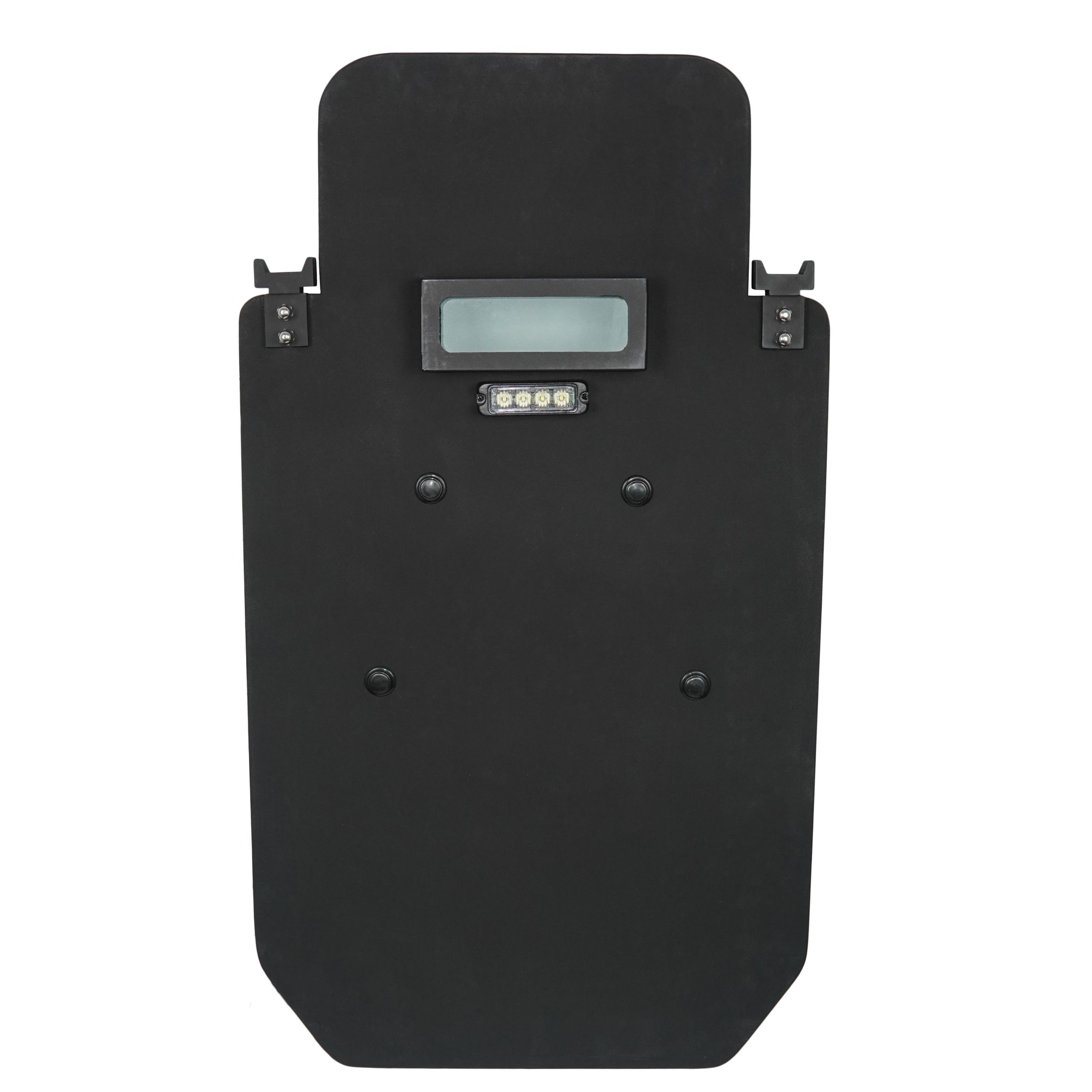
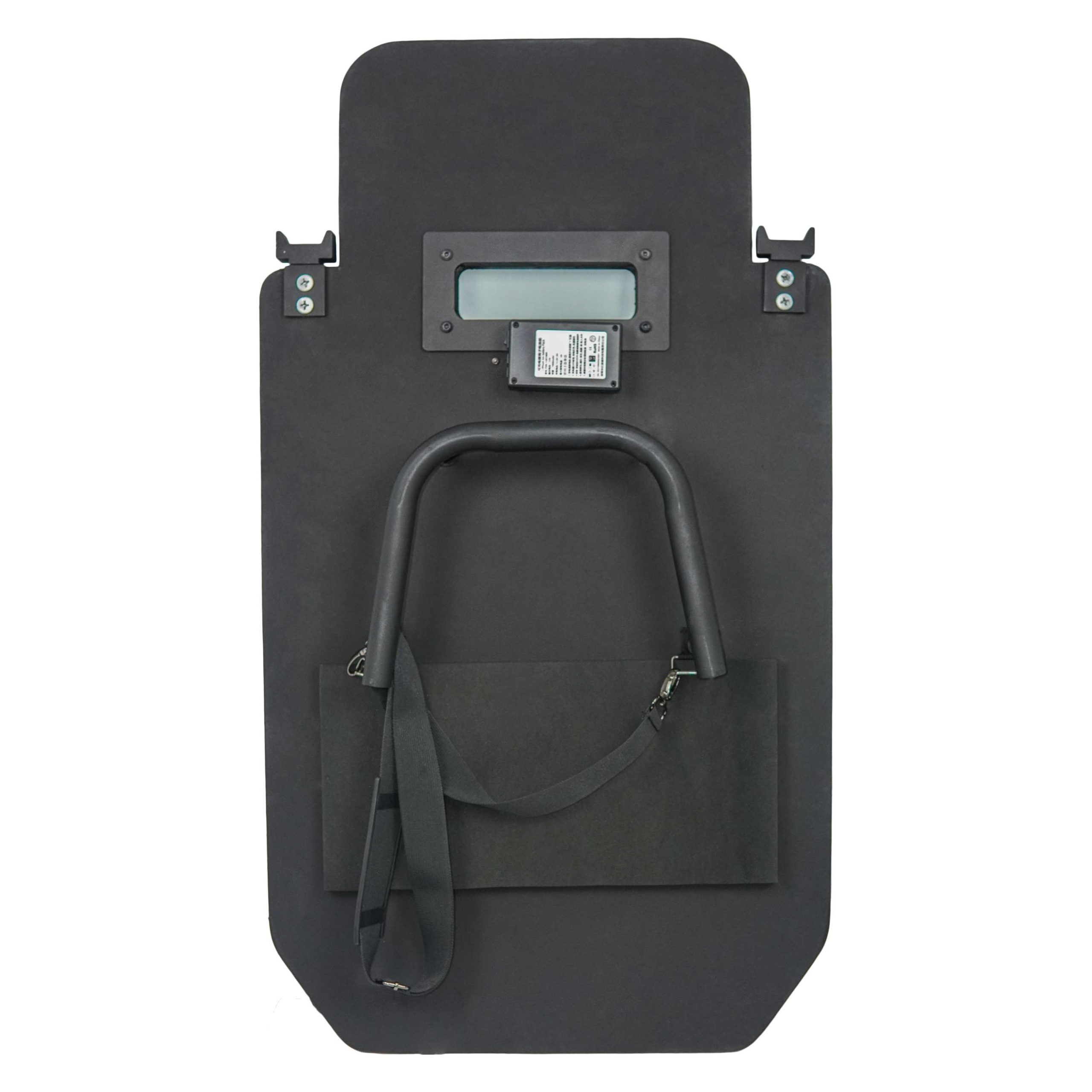
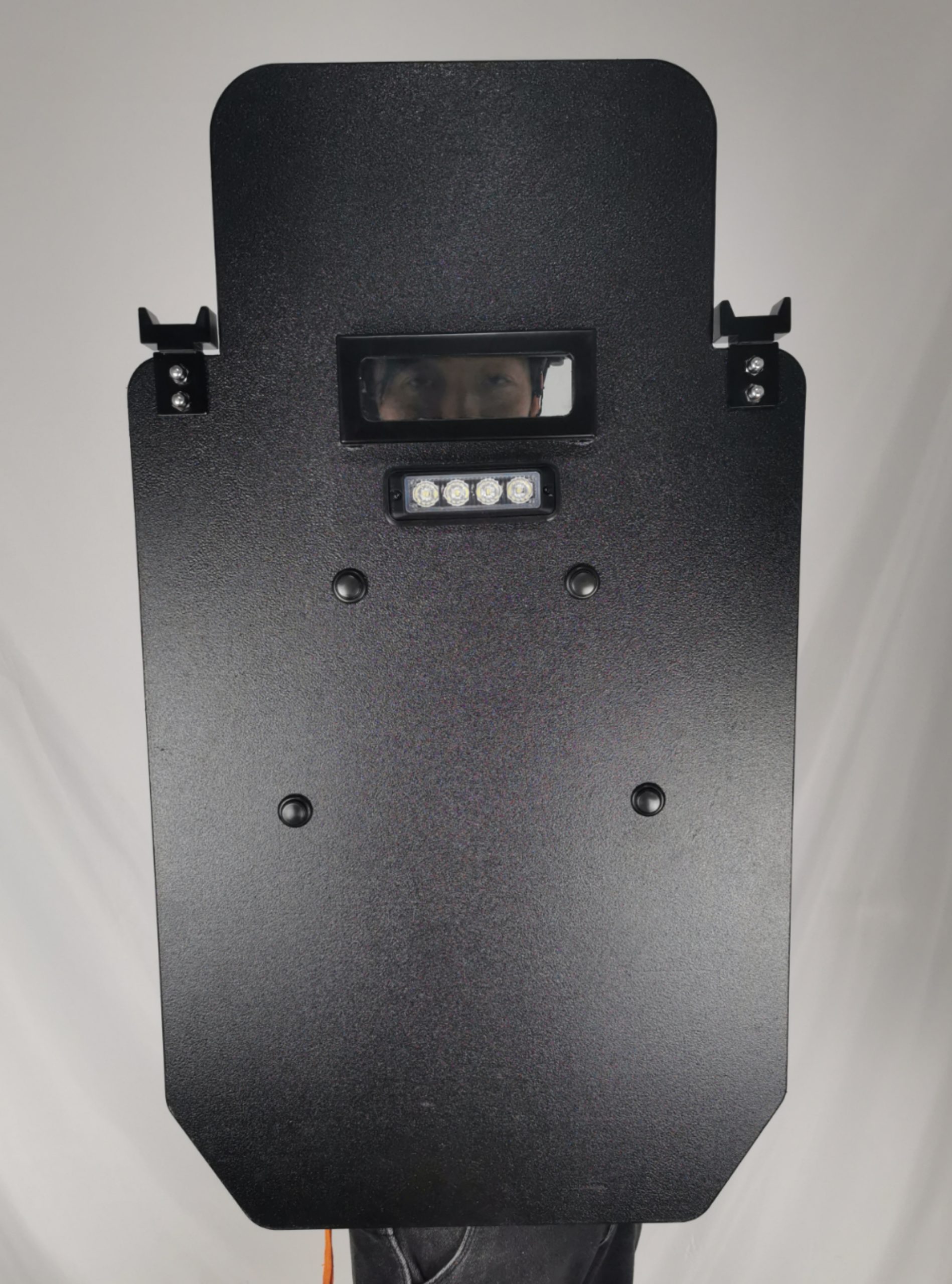
Reliable Ballistic Shields for Law Enforcement and Tactical Protection
Ballistic shields provide essential protection for law enforcement, military, and security personnel in high-threat situations. These shields offer a portable and reliable defense against various ballistic threats, enhancing officer safety and tactical advantage.
- NIJ Level IIIA & III Protection: Stops handgun and rifle rounds.
- Durable Construction: Made with high-performance materials for long-lasting use.
- Lightweight Design: Reduces fatigue and allows for greater maneuverability.
- Integrated Features: Available with lights, viewports, and other tactical options.
- Customizable Configurations: Adaptable to specific mission requirements.
Portable Armor Solution for Dynamic High-Risk Environments
H WIN‘s ballistic shield is engineered to provide reliable frontal protection in situations where fixed cover is unavailable. The structure balances ballistic resistance with controlled weight, allowing operators to advance, hold position, or reposition under active threat. The shield supports common rifle and fragmentation risks while maintaining stable handling during close-quarter movement.
Its portable design enables rapid deployment in confined spaces such as corridors, stairwells, and vehicle approaches. For law enforcement, security teams, and tactical units, this solution delivers practical protection without restricting operational flexibility.
Specifications of Level 3 Ballistic Sheild
| Feature | Details |
|---|---|
| Bulletproof Level | NIJ IIIA / III |
| Size | 35.4 x 19.6″ (900mm x 500mm) |
| Carrier Fabric | Polyester |
| Flash LED | 400-600 Lumen (Optional) |
| Gun Butts | Available |
| Weight | 12.5 – 28.5 lb (5.7-12.95 kg) |
H WIN Ballistic Shield Protection Levels
Our ballistic shields are available in NIJ Level IIIA and Level III ratings, allowing you to select the appropriate level of protection for your specific needs.
- Level III Ballistic Shield: Offers enhanced protection against rifle threats, making it ideal for tactical teams and high-risk operations. This rifle rated ballistic shield is crucial for situations involving high-powered firearms.
- Level IIIA Ballistic Shield: Provides reliable protection against handgun threats, suitable for law enforcement patrol, security details, and crowd control. A ballistic shield Level IIIA remains a practical choice for everyday use.
Why Choose H WIN As Your Supplier
As a dedicated body armor manufacturer, H WIN supports OEM and wholesale supply with stable production capability. Product design emphasizes portability and lightweight structure to support efficient field deployment. Weight distribution and handling balance are optimized for controlled movement in operational environments. H WIN works with global buyers to establish reliable, long-term supply partnerships.
What Is a Ballistic Shield?
A ballistic shield is a handheld or body-supported armor panel. It is engineered to stop specific ballistic threats defined by recognized standards such as NIJ. The shield is typically used in dynamic risk environments where fixed cover is unavailable.
Unlike body armor plates, a ballistic shield protects a wider frontal area. It often integrates viewing windows, weapon ports, or lighting mounts. The shield is designed for short-duration exposure rather than continuous wear.
Ballistic Protection Composition and Materials
Structural Core Materials
The performance of a ballistic shield depends on its core structure. Common material systems include:
- UHMWPE laminates
These fibers offer high tensile strength and low density. They are effective against rifle threats with reduced weight. Heat resistance is limited, which affects storage conditions. - Ceramic composite layers
Ceramic strike faces are paired with fiber backers. They disrupt armor-piercing projectiles. Ceramics increase protection but also increase thickness and cost. - Hardened steel plates
Steel shields provide consistent multi-hit capability. They are heavy and prone to spall unless coated or layered with anti-fragment systems.
External Coatings and Edge Protection
A ballistic shield requires surface treatments. These include anti-spall coatings, abrasion-resistant finishes, and sealed edges. Edge sealing prevents moisture ingress. This extends service life in humid or coastal environments.
Key Design Features of a Ballistic Shield
Viewing Systems
A ballistic shield may include a viewport or full transparent section. Optical clarity and distortion control are important. Poor clarity reduces situational awareness. Laminated ballistic glass thickness must align with threat level.
Ergonomics and Handling
Handle position affects fatigue and control. Most shields use padded vertical or angled grips. Some designs include forearm rests or shoulder support. Weight distribution is a critical design factor.
Modular Add-Ons
Modern ballistic shield systems support modular components. These may include:
- Integrated LED lighting
- Weapon firing ports
- Camera systems
- Communication mounts
Modularity increases flexibility but adds weight and maintenance complexity.
Advantages of Using Ballistic Shields
A ballistic shield provides immediate frontal protection. It allows controlled movement in exposed areas. It reduces reliance on environmental cover. It also protects multiple personnel during entry operations.
From a procurement perspective, a ballistic shield is reusable. Service life often exceeds soft armor solutions. Maintenance requirements are predictable when materials are correctly specified.
Limitations and Trade-Offs
A ballistic shield is heavy compared to body armor. Prolonged use causes fatigue. Coverage is directional, not full-body. Side and rear exposure remains a risk.
High-level ballistic shield models increase cost and weight. Transparent variants reduce protection or increase thickness. These trade-offs must be evaluated based on operational need.
Applications of Ballistic Shields
Law Enforcement and Tactical Units
Law enforcement teams use ballistic shields during high-risk entries. The shield leads the stack. It reduces exposure during door breaches and hallway movement.
Military and Security Operations
Military police and security forces use ballistic shields in checkpoint control and urban operations. The shield provides mobile cover in confined spaces.
Protective Services and Infrastructure Security
Ballistic shields are used in critical infrastructure protection. This includes embassies, transport hubs, and industrial facilities. Shields support response teams during active threat containment.
FAQ
Yes, ballistic shields can stop rifle rounds when they are designed and rated for rifle threats.
A ballistic shield with NIJ Level III rating is engineered to stop common rifle rounds such as 7.62×51mm NATO ball ammunition. NIJ Level IV ballistic shields are designed to stop armor-piercing rifle rounds using ceramic or composite strike faces. The actual rifle protection capability depends on the shield’s NIJ certification, material structure, and thickness, not on appearance or size alone.
A ballistic shield typically weighs between 15 kg and 35 kg, depending on protection level and materials.
Lightweight ballistic shields using UHMWPE composites are usually found at the lower end of the range. Higher-rated ballistic shields, especially Level IV models with ceramic components, are heavier due to increased thickness and strike-face requirements. Weight is a critical factor because it directly affects portability, handling endurance, and deployment speed in operational environments.
Ballistic shields are bullet resistant, not absolutely bulletproof.
A ballistic shield is engineered to stop specific ballistic threats defined by its NIJ protection rating, such as handgun or rifle rounds. Its ability to stop bullets depends on material composition, thickness, and certified testing standards. No portable ballistic shield can stop every possible projectile under all conditions, but properly rated models provide reliable protection against their specified threat levels.
Ballistic shields are effective for frontal ballistic protection during controlled movement.
In operational use, a ballistic shield significantly reduces exposure to firearm threats when deployed correctly. Effectiveness depends on protection level, operator handling, and engagement distance. When used within defined threat parameters, ballistic shields provide consistent and predictable protection in high-risk environments such as tactical entry, corridor movement, and vehicle approaches.