

Level III body armor is the benchmark for rifle-rated ballistic protection. Whether you’re a law enforcement professional, security contractor, or prepared civilian, understanding exactly what Level 3 armor stops — and what it doesn’t — is critical before making a purchase decision.
What Level 3 Body Armor Stops
Level III body armor is specifically engineered to defeat high-velocity rifle rounds that would pass straight through soft body armor. Understanding its protective envelope requires looking at both the calibers it’s rated against and the specific ammunition types covered under testing protocols.
Rifle Rounds Stopped
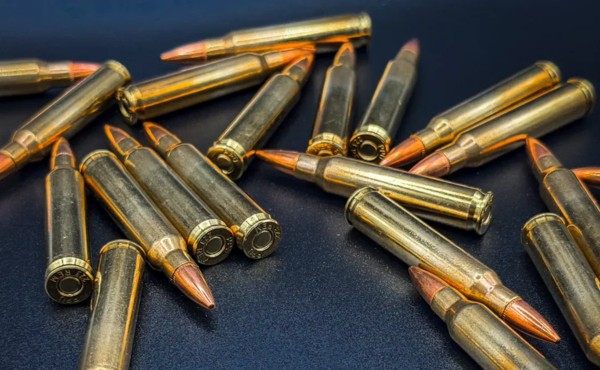
At its core, Level III armor is designed to stop standard lead-core rifle ammunition traveling at velocities up to approximately 2,780 feet per second. The NIJ standard test round is the 7.62×51mm NATO (commonly known as .308 Winchester) at 147 grain full metal jacket. If a plate defeats this round during certification, it earns the Level III rating.
In real-world performance, quality Level III plates routinely stop a wide range of common rifle threats beyond the single test projectile used for certification.
Assault Rifle Calibers
Level III hard armor plates are effective against several of the most commonly encountered rifle calibers. These include the 5.56×45mm NATO (standard AR-15 and M16 ammunition), 7.62×39mm (AK-47 and AKM platforms), 7.62×51mm NATO (.308 Winchester), and the .30-06 Springfield with standard ball projectiles. These cover the vast majority of semi-automatic and battle rifle platforms available today.
Common Ammunition Types
| ✓ Defeated by Level III | ✗ May Not Be Defeated |
|---|---|
|
|
Key takeaway: Level III armor provides reliable protection against the most widely available factory-loaded rifle ammunition — making it the standard choice for military, law enforcement, and civilian defensive applications.
What Level 3 Armor Can’t Stop
No body armor is a guarantee against every threat. Level III has well-documented limitations that every wearer must understand before relying on their plates in a high-risk environment.
Armor-piercing (AP) ammunition is the primary limitation of standard Level III protection. AP rounds are constructed with hardened steel or tungsten carbide cores that are specifically designed to defeat ballistic plate materials. The classic example is the .30 caliber M2 AP round — a threat that requires NIJ Level IV armor to reliably stop.
Military surplus AP ammunition, while restricted for civilian sale in many jurisdictions, remains a real consideration in law enforcement and military contexts where Level III plates are deployed.
Armor-Piercing Rounds
Velocity is as important as projectile construction. Standard Level III plates are tested at specific velocities; rounds traveling significantly faster than the test threshold can generate enough energy to defeat plates that would otherwise perform. Magnum rifle cartridges like the .300 Win Mag and .338 Lapua — common in long-range precision applications — generate muzzle velocities and energies that exceed Level III’s performance envelope.
High-Velocity Rifle Threats
Velocity is as important as projectile construction. Standard Level III plates are tested at specific velocities; rounds traveling significantly faster than the test threshold can generate enough energy to defeat plates that would otherwise perform. Magnum rifle cartridges like the .300 Win Mag and .338 Lapua — common in long-range precision applications — generate muzzle velocities and energies that exceed Level III’s performance envelope.
Critical limitation: The popular 5.56mm M855 “green tip” round, while not technically AP, contains a steel penetrator tip that allows it to defeat many standard Level III polyethylene plates. Always verify whether a Level III plate is explicitly rated against M855/SS109 before purchasing for environments where this round may be encountered.
Limitations of Level 3 Body Armor
Beyond specific threat types, Level III armor has inherent physical limitations users must account for. Coverage area is a significant factor — even a perfectly fitted plate carrier only protects the torso’s vital zone. Extremities, neck, and groin remain vulnerable.
Additionally, plate degradation is real: ballistic plates that have absorbed even a single hit should be considered compromised and replaced, even if no visible cracking is apparent. Impact trauma — blunt force transferred through the plate — can also cause serious injury even when the plate stops penetration.
Level 3 Body Armor Standards
The Level III designation is not a marketing term — it’s a defined technical standard maintained by the National Institute of Justice (NIJ), the research arm of the U.S. Department of Justice.
NIJ Certification
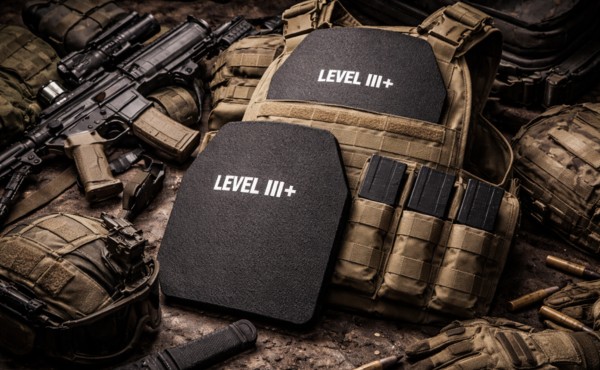
The NIJ establishes and administers the ballistic resistance standards that govern body armor sold to law enforcement and the public in the United States. The standard relevant to rifle-rated armor is NIJ Standard 0101.06 (currently being updated to 0101.07). Under this standard, armor must be independently tested by an NIJ-approved laboratory before a manufacturer can claim compliance.
| NIJ Level | Primary Threat | Velocity | Armor Type |
|---|---|---|---|
| Level IIA | 9mm FMJ, .40 S&W | ~1,165 fps | Soft armor |
| Level II | 9mm FMJ, .357 Magnum | ~1,450 fps | Soft armor |
| Level IIIA | .357 SIG, .44 Magnum | ~1,400 fps | Soft armor |
| Level III | 7.62×51mm NATO FMJ | ~2,780 fps | Hard plate |
| Level IV | .30 cal AP (M2 AP) | ~2,880 fps | Hard plate |
Testing Methods
NIJ testing involves firing the specified test rounds into armor samples at controlled velocities and distances. Plates are evaluated both in new condition and after conditioning — simulating wear, humidity, temperature cycling, and flex — to ensure the armor maintains its protective properties throughout its rated service life. Multiple shots are fired at different strike locations to assess consistency across the plate’s face.
Performance Criteria
For a plate to pass Level III certification, it must stop all test rounds without allowing complete penetration. Additionally, backface deformation — the indentation caused by the projectile’s impact energy transferring into the backing material — must not exceed 44mm. This 44mm limit is clinically significant: deformations beyond this threshold correlate with a high risk of serious blunt trauma injury, even without penetration.
Practical Considerations
Selecting and wearing Level III body armor involves tradeoffs that go beyond ballistic ratings. Real-world protective value depends as much on whether you’ll actually wear the armor as on what threats it can technically stop.
Weight and Comfort
Level III hard armor plates are significantly heavier than soft armor panels. Steel Level III plates typically weigh 7–10 lbs per plate, while polyethylene (PE) and ceramic composite plates range from 3.5–6 lbs each. A full front-and-back plate carrier setup can add 10–20 lbs to a wearer’s load before accounting for carrier weight, accessories, and side plates. This weight directly impacts mobility, endurance, and the likelihood that users will consistently wear their armor during extended operations.
| Steel Plates | Ceramic / PE Composite |
|---|---|
|
|
Materials Used
Level III plates are manufactured from three primary material categories.
Steel plates use high-hardness alloy steel (typically AR500 or AR550 grade) and are among the most durable and affordable options, though they require anti-spall coatings to mitigate dangerous fragmentation upon impact.
Ceramic plates use alumina (aluminum oxide), silicon carbide, or boron carbide striking faces bonded to a backing material; the ceramic shatters on impact, absorbing energy while the backing catches fragments.
Ultra-high-molecular-weight polyethylene (UHMWPE) plates use compressed layers of high-strength polymer fiber and offer the best weight-to-protection ratio, though they can be susceptible to AP threats and high temperatures.
Many modern plates combine materials — a ceramic strike face over a polyethylene backing — to leverage the strengths of both: the ceramic’s hard face defeats penetration while the PE backing manages backface deformation and catches ceramic fragments.
Fit and Coverage
Even the highest-rated Level III plate provides zero protection if it isn’t positioned correctly. Plates should cover the vital zone — roughly from the clavicle to the bottom of the sternum, and side-to-side across the chest. The most common sizing error is wearing plates too low, leaving the heart and upper chest exposed.
Standard plate sizes (10×12 inches being the most common) fit the average adult male torso; smaller shooters, women, and slender individuals should look for purpose-designed plates in sizes like 8×10 or medium shooters cut to ensure genuine vital zone coverage without the plate riding off the body during movement.
Final recommendation: For most users, a NIJ-certified Level III+ ceramic or PE composite plate in a properly fitted carrier strikes the ideal balance of weight, protection, and cost. Verify your plate’s specific ratings against M855 green tip if that’s a relevant threat in your environment — not all Level III plates are equal in this regard.
Level III body armor represents the entry point for genuine rifle protection and remains the standard choice for the majority of military, law enforcement, and prepared civilian applications. By understanding its certified capabilities, documented limitations, and practical realities, you can make an informed decision that delivers real protection when it matters most.