

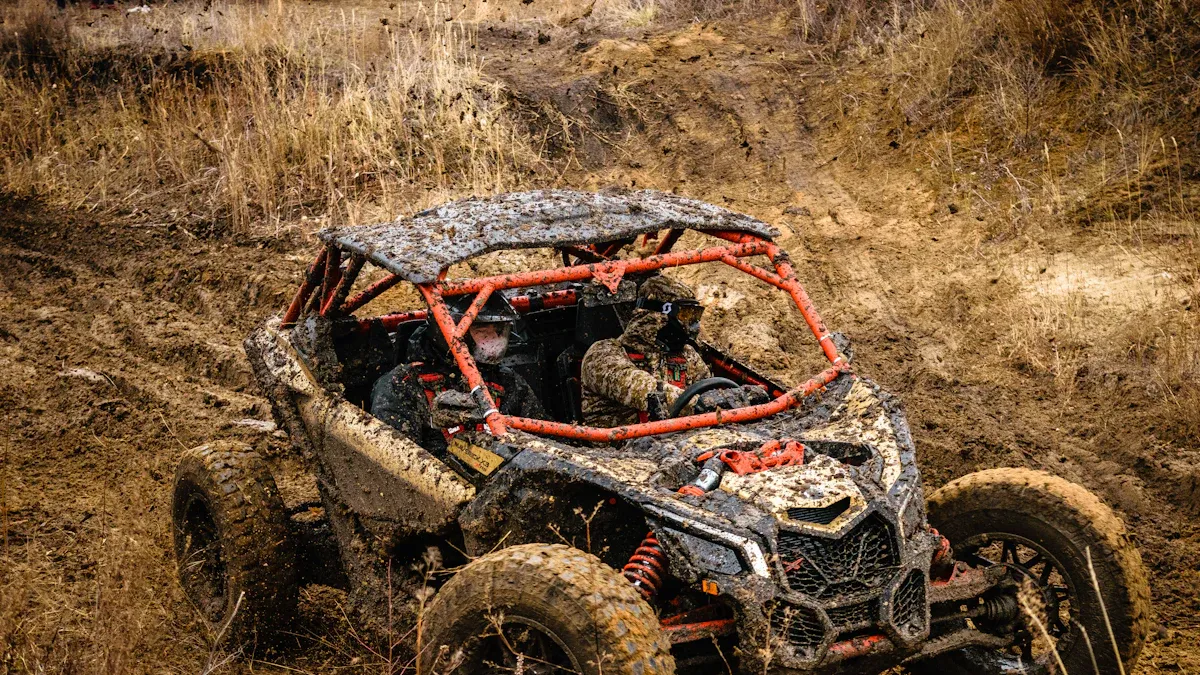
Utility terrain vehicles serve as specialized transport platforms built for tactical operations in harsh environments.
These vehicles stand apart from other off-road options because they offer greater payload capacity, advanced control mechanisms, and roll-over protection, which are vital for military and law enforcement missions.
| Design Feature | Description |
|---|---|
| Enhanced Payload Capacity | Carries substantial equipment for mission readiness. |
| Roll-over Protection | Includes roll cage structures for safety in rough terrain. |
| Advanced Control Mechanisms | Provides precise navigation through challenging environments. |
These tactical design features help teams achieve operational readiness and improve mission outcomes.
Utility Terrain Vehicles: Definition and Role
What Are Utility Terrain Vehicles?
Utility terrain vehicles, often called side-by-sides, are off-road utility vehicles designed for multiple users. Military and law enforcement standards classify these vehicles as having a Gross Vehicle Weight Rating (GVWR) of 3,750 pounds or less. Unlike all-terrain vehicles, which usually carry only one operator, utility terrain vehicles can transport several people and their gear. Teams rely on these vehicles for their versatility and ability to move across a wide range of environments. Their design supports missions that require quick movement, heavy loads, and reliable performance in unpredictable conditions.
UTVs vs. Other Off-Road Vehicles
Utility terrain vehicles stand out from other off-road vehicles because of their unique tactical advantages. The following table highlights key differences:
| Tactical Advantage | Description |
|---|---|
| Adaptability | Teams can modify the vehicle to meet different mission and operational needs. |
| Speed | Units move faster than on foot, covering more ground in less time. |
| Maneuverability | The vehicle handles rugged terrain, mud, and urban settings with ease. |
| Low Profile | A smaller target profile makes it less vulnerable than larger vehicles. |
These features make utility terrain vehicles a preferred choice for missions where flexibility and speed matter most. Operators can quickly adjust the vehicle for new tasks, which is not always possible with heavier or less agile off-road vehicles.
Tactical Use Cases
Military and law enforcement teams use utility terrain vehicles in a variety of mission scenarios:
- Troop and equipment transport: Teams move personnel, weapons, and supplies quickly across difficult terrain.
- Reconnaissance and surveillance missions: Units scout enemy positions and gather intelligence in challenging environments.
- Logistical and supply chain support: Vehicles deliver ammunition, medical supplies, and essential gear to field units.
- Base operations and security: Crews use them for maintenance, perimeter patrols, and security details on bases.
Utility terrain vehicles excel in roles that demand speed, adaptability, and reliable performance. Their tactical design allows teams to respond quickly to changing mission needs and harsh terrain challenges.
Tactical Design for Harsh Terrain
Rugged Build and Protection
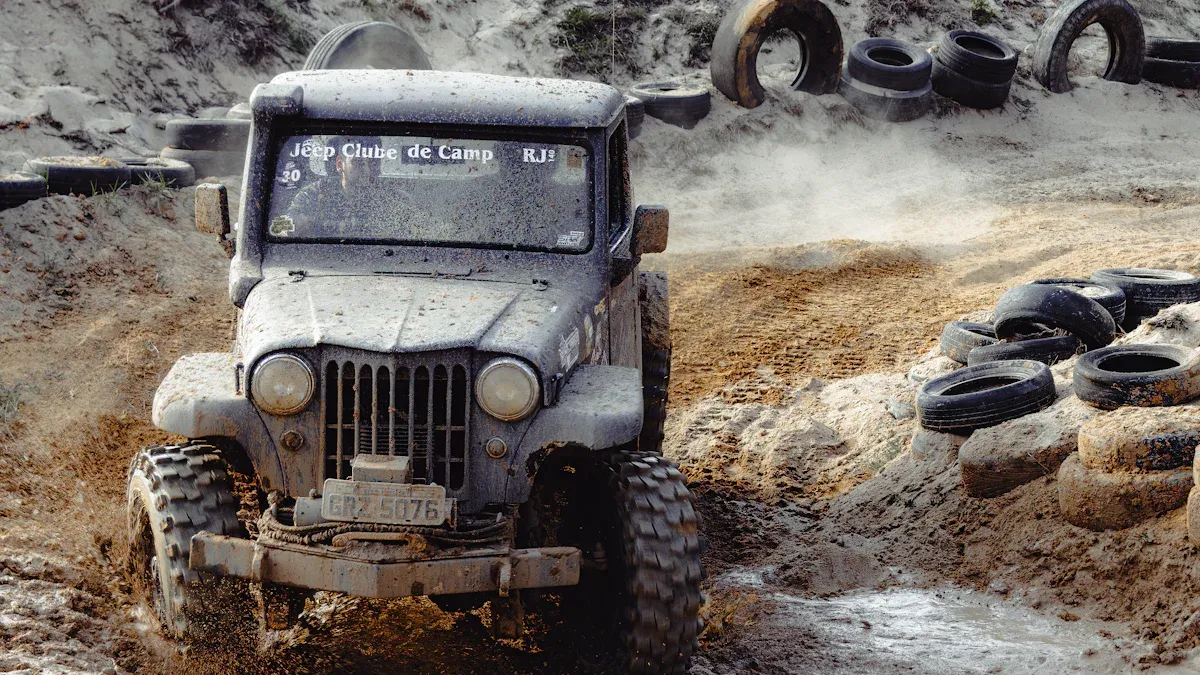
Utility terrain vehicles feature advanced construction to withstand the demands of tactical missions. Teams rely on reinforced materials and protection systems to keep operators safe during reconnaissance and transport tasks.
These features help crews maintain operational readiness in hostile environments. Armoring and reinforced panels shield occupants from ballistic threats and blasts. Run flat tire systems and protected batteries ensure vehicles continue to function even after sustaining damage. Night vision cameras and air filtration systems support reconnaissance and tactical operations in low visibility or contaminated areas.
Suspension and Mobility
Suspension systems play a critical role in the mobility and stability of utility terrain vehicles. Operators select suspension types based on terrain and mission requirements.
Different suspension designs affect how vehicles handle uneven surfaces and obstacles. Teams often choose independent suspension for smoother rides and better handling during reconnaissance.
Solid axle rear suspension supports heavy loads, which is important for tactical supply missions. Multi-link and axle-less systems offer increased ground clearance and articulation, improving mobility in rocky or muddy terrain.
- Independent suspension enhances handling, providing better traction and stability during cornering.
- High articulation allows wheels to maintain contact with the ground on uneven terrain, supporting mobility and tactical performance.
- Combination suspension balances off-road capability and on-road performance, making vehicles suitable for various driving conditions.
- Air suspension adjusts vehicle height for increased ground clearance or improved stability at high speeds.
Suspension choices directly impact the success of tactical operations. Reliable mobility ensures teams can reach remote locations for reconnaissance, supply drops, or rapid extraction.
UTVs in Tactical Missions
Rapid Deployment and Transport
Utility terrain vehicles play a vital role in tactical missions by enabling rapid deployment of troops and equipment. Teams use these vehicles to reach remote or hazardous locations quickly, which is essential for both combat missions and emergency response. UTVs serve as a rapid response platform, allowing first responders to deliver medical supplies and personnel to areas that larger vehicles cannot access. This speed can make a difference in life-or-death situations.
| Advantage | Description |
|---|---|
| Terrain Access | UTVs reach locations inaccessible to larger all-terrain vehicles. |
| Speed of Deployment | Small crews can mobilize UTVs quickly, improving response times. |
| Versatility | UTVs transport troops and logistics to remote sites for rapid response. |
Troops often use UTVs for swift insertions and extractions, especially in challenging environments. Fire departments and military operations position these vehicles strategically to improve initial attack success rates and maintain supply lines.
Reconnaissance and Support
UTVs excel in reconnaissance missions due to their mobility and agility. Troops rely on these vehicles to gather intelligence, monitor enemy movements, and conduct forward observation.
Many UTVs come equipped with advanced sensors for target acquisition and area surveillance. These features help troops assess routes and map threats, supporting both logistics and tactical missions.
- UTVs provide mobility for reconnaissance missions.
- Advanced sensors support intelligence gathering.
- Troops use UTVs for forward observation and route assessment.
Support roles include transporting logistics such as ammunition, food, and medical equipment. UTVs ensure that supply chains remain operational, even in rugged or hostile areas.
Adaptability for Mission Needs
Versatility defines UTVs in tactical missions. Troops can transition these vehicles between paved roads, gravel, sand, or snow without losing mobility. Features like run-flat tires and central tire inflation systems enhance operational flexibility, allowing troops to maintain speed and control. This adaptability reduces transit time and exposure to threats.
- UTVs adapt to changing terrain and mission requirements.
- Troops benefit from modifications such as upgraded suspension, added armor, and improved lighting.
- Logistics teams use UTVs for transporting troops and supplies in unpredictable conditions.
UTVs support a wide range of tactical missions, making them essential for military operations in challenging environments.
Customization and Real-World Applications
Mission-Specific Modifications
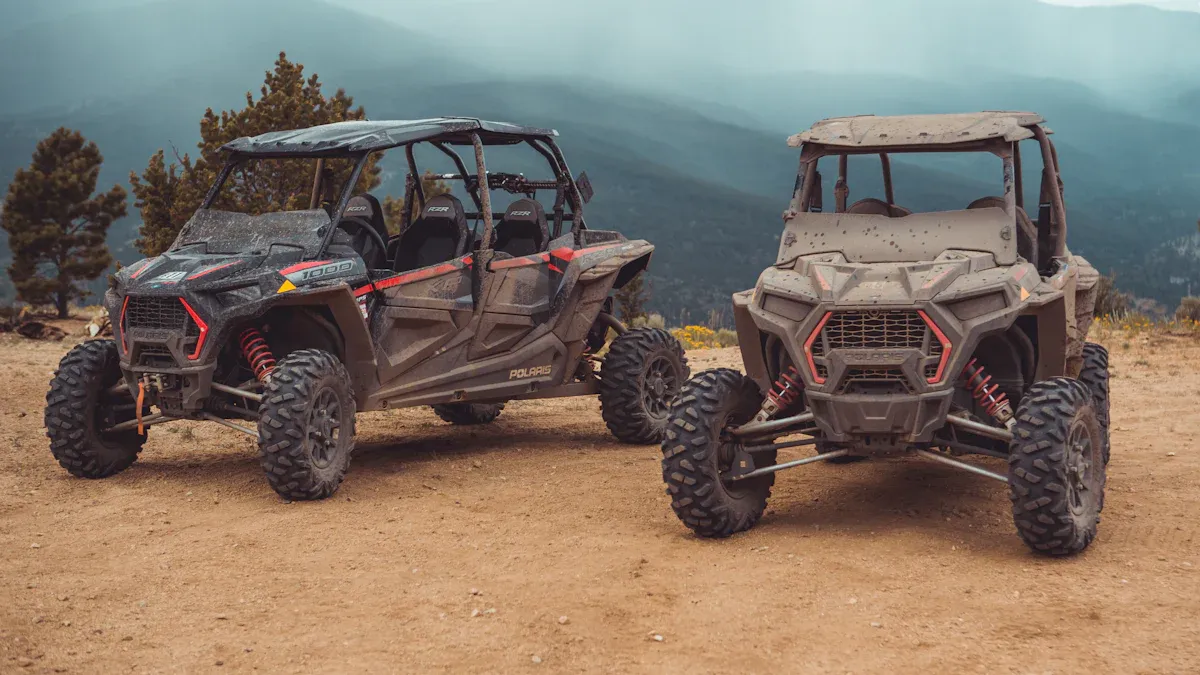
Teams often customize utility vehicles to meet the demands of each mission. These modifications help utility vehicles adapt to different tactical scenarios. Operators can add weapon mounts, advanced communication systems, or extra cargo racks. Some utility vehicles receive upgrades like infrared lighting or enhanced armor. These changes make utility vehicles more effective in the field.
Utility vehicles with custom features support a wide range of operations. For example, a team may need utility vehicles with medical kits for rescue missions.
Another group may require utility vehicles with surveillance equipment for reconnaissance. Utility vehicles can also carry extra fuel or water tanks for long missions. These options give teams the flexibility to prepare for any situation.
Operators value utility vehicles that can change quickly between roles. A single utility vehicle may serve as a troop carrier one day and a supply hauler the next. This adaptability saves time and resources. Utility vehicles with modular designs make it easy to swap out equipment as needed.
Use in Extreme Conditions
Utility vehicles must perform in some of the world’s harshest environments. Teams rely on utility vehicles in arctic cold, desert heat, and steep mountains.
These vehicles face mud, snow, sand, and rocky ground. Utility vehicles with specialized tires, reinforced frames, and sealed electronics handle these challenges.
The table below shows common real-world applications of utility vehicles in extreme conditions:
| Application Area | Description |
|---|---|
| Emergency Response | Utility vehicles are crucial for reaching victims in inaccessible areas during disasters like wildfires and floods. |
| Construction | They facilitate the transport of workers and materials across rough terrains, enhancing safety and productivity. |
| Military Operations | Used for reconnaissance and logistics in rugged terrains, showcasing their adaptability and durability. |
Utility vehicles support emergency crews during wildfires, floods, and earthquakes. Construction teams use utility vehicles to move supplies across uneven ground.
Military units depend on utility vehicles for patrols and supply runs in remote areas. Utility vehicles with weatherproof cabins and heating systems keep crews safe in freezing temperatures. In deserts, utility vehicles with cooling systems and dust filters protect both operators and equipment.
Operators choose utility vehicles for their reliability and versatility. Utility vehicles can cross rivers, climb hills, and travel long distances without breaking down. Teams trust utility vehicles to deliver results in any environment.
Conclusion
Utility terrain vehicles stand as vital assets in military operations. Their tactical design features—such as reinforced protection and advanced mobility—directly improve mission effectiveness and operational flexibility.
The table below shows how UGVs support decision-making and extend operational reach in complex environments, which is essential for both military logistics and field success.
Teams should consider UTVs for their adaptability and value in modern military operations.