

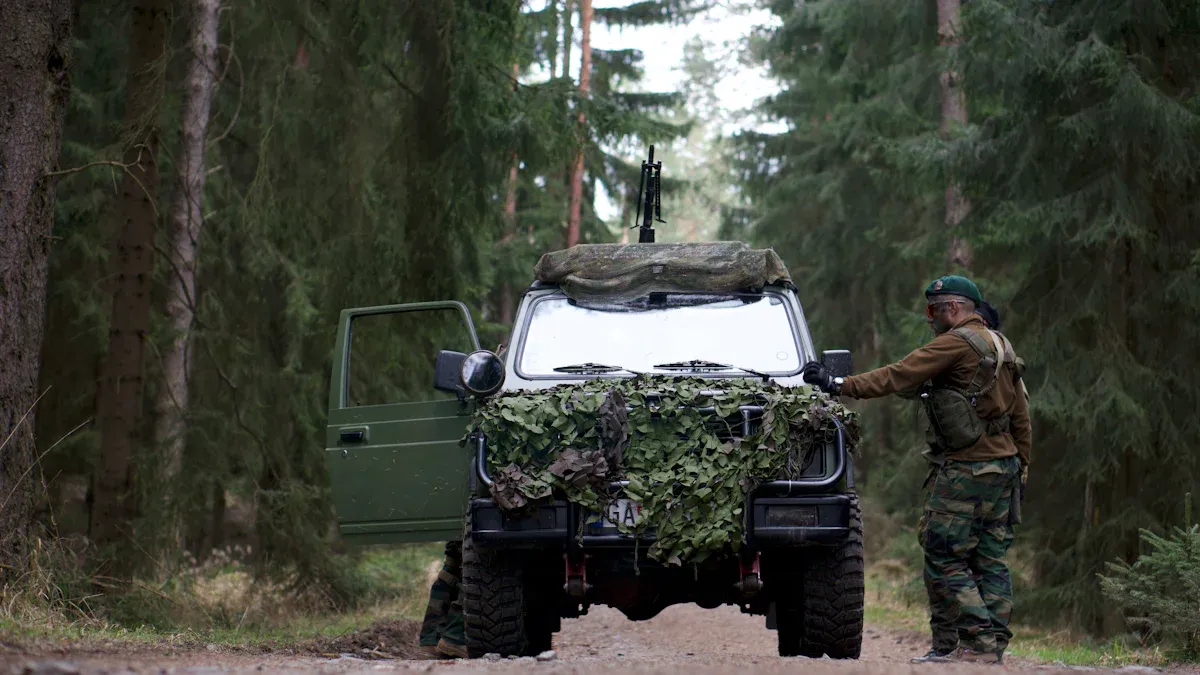
Military convoys often rely on vehicle selection for mission success. UTV offers greater crew capacity and tactical equipment options.
Soldiers use both vehicles for perimeter patrol, search and rescue, emergency response, and transport. Safety and efficiency improve when the right vehicle supports convoy operations.
Careful choice between these vehicles increases protection for personnel and ensures smooth movement through challenging terrain.
Vehicle Roles In Military
UTV Roles And Features
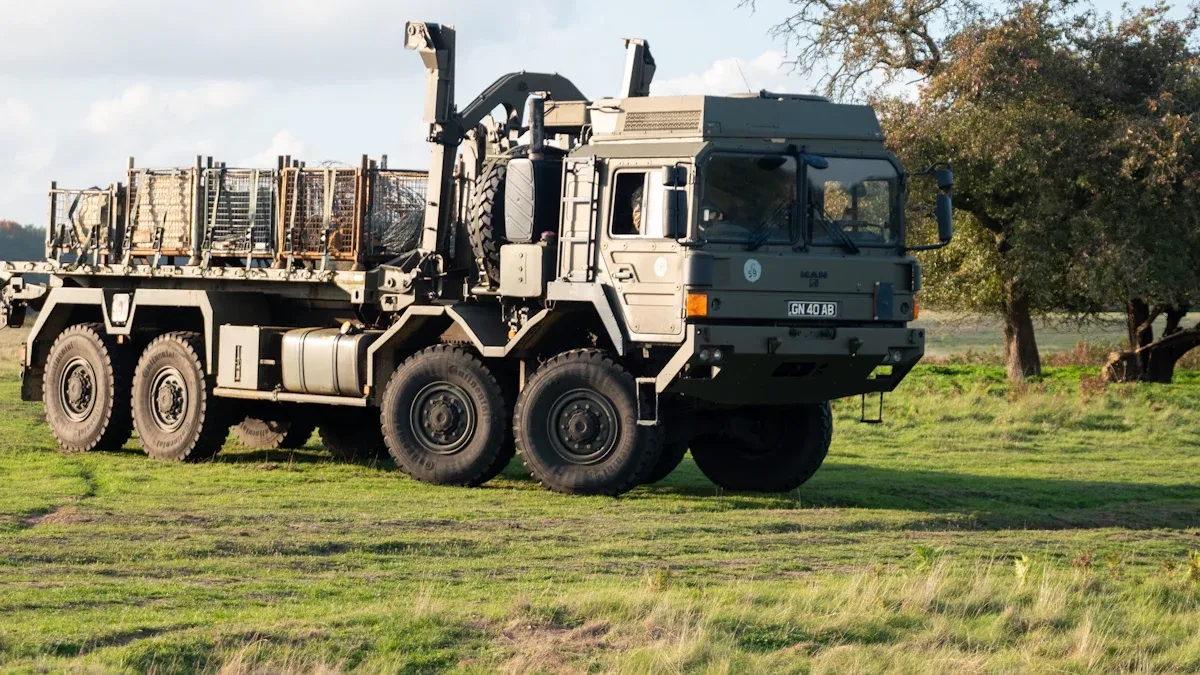
Military teams use UTV vehicles for a range of tasks in convoy operations. These vehicles carry multiple soldiers and equipment.
The larger size allows for the transport of medical supplies, communication gear, and tactical tools. UTVs often feature roll cages and seat belts, which increase safety for the crew. Soldiers rely on these vehicles for perimeter patrol, rapid deployment, and casualty evacuation.
UTVs support teamwork by allowing several personnel to ride together. This improves coordination during missions. The cargo space helps teams move heavy gear quickly. Some models include mounts for light weapons or surveillance devices.
| UTV Feature | Military Benefit |
|---|---|
| Crew Capacity | Team transport |
| Cargo Space | Equipment movement |
| Safety Features | Protection for soldiers |
| Communication Mount | Mission coordination |
ATV Roles And Features
ATVs serve a different role in military convoys. These vehicles carry one rider, sometimes with a small passenger.
Their compact design lets soldiers travel through narrow paths and rough terrain. ATVs move quickly and can reach places that larger vehicles cannot. Troops use them for scouting, messenger duties, and quick response missions.
- ATVs offer high maneuverability.
- Soldiers use them for reconnaissance.
- These vehicles help reach remote areas fast.
ATVs do not provide much protection or cargo space. They work best for solo missions or when speed is critical. Teams choose ATVs for tasks that require agility and rapid movement.
Key Comparison Factors
Protection And Safety
Military convoys face many threats, including rough terrain and hostile actions. UTVs offer better protection for soldiers. These vehicles often include roll cages, seat belts, and reinforced frames. Teams can rely on these features to reduce injuries during accidents or attacks.
ATVs, on the other hand, provide little protection. Riders remain exposed to the environment and possible hazards. Safety gear, such as helmets and body armor, becomes essential for ATV operators.
Note: UTVs increase crew safety by keeping soldiers inside a protective structure. ATVs require more personal caution and skill.
| Vehicle Type | Safety Features | Crew Protection Level |
|---|---|---|
| UTV | Roll cage, seat belts | High |
| ATV | Minimal, helmet required | Low |
Maneuverability
Maneuverability plays a key role in convoy operations. ATVs excel in this area. Their small size and light weight allow riders to move through tight spaces and dense terrain. Soldiers use ATVs to scout ahead or reach places that larger vehicles cannot access.
UTVs remain agile but cannot match the nimbleness of ATVs. Their larger size limits movement in narrow paths or thick forests. However, UTVs still perform well on rough ground and can turn quickly when needed.
- ATVs: Best for tight turns and narrow trails.
- UTVs: Good for open areas and moderate obstacles.
Reliability
Reliability ensures that vehicles complete missions without breakdowns. Both UTVs and ATVs have strong reputations for durability in military use. UTVs handle heavy loads and long distances better. Their engines and frames support frequent use and rough handling.
ATVs require less maintenance for short missions but may wear out faster under heavy loads. Soldiers trust UTVs for extended patrols and supply runs. ATVs work best for quick tasks and short trips.
Tip: Regular maintenance increases the lifespan of both vehicle types and reduces the risk of mission failure.
Communication Integration
Effective communication keeps convoys organized and safe. UTVs provide more space for radios and communication gear. Teams can install antennas, headsets, and other devices inside the vehicle. This setup allows for clear and constant contact with command centers.
ATVs have limited space for equipment. Riders may use handheld radios, but these can be harder to operate while moving. UTVs support better teamwork through integrated communication systems.
| Vehicle Type | Communication Equipment Capacity | Ease of Use |
|---|---|---|
| UTV | High | Easy |
| ATV | Low | Moderate |
Tactical Versatility
Tactical versatility means adapting to different missions. UTVs carry more soldiers and gear, making them suitable for many tasks. Teams use them for medical evacuation, supply transport, and rapid deployment.
UTVs can mount light weapons or surveillance tools, increasing their usefulness. ATVs focus on speed and agility. They excel in reconnaissance, messenger duties, and quick response actions. Each vehicle type brings unique strengths to military convoys.
- UTVs: Support teamwork, heavy loads, and multiple mission types.
- ATVs: Offer speed, stealth, and access to hard-to-reach areas.
Choosing the right vehicle depends on the mission profile and terrain. Teams often use both types together for maximum effectiveness.
UTV And ATV Pros & Cons
UTV Pros & Cons
Military teams often choose a utv for convoy operations because it supports group tasks. These vehicles have different types, can carry several soldiers and large amounts of equipment. The design includes safety features like roll cages and seat belts, which protect the crew during rough missions. UTVs also allow for easy installation of radios and tactical gear.
Pros:
- Transports multiple soldiers and heavy gear
- Offers strong safety features for crew protection
- Supports mounted communication and surveillance equipment
- Handles rough terrain and long distances
Cons:
- Larger size can limit movement in tight spaces
- Makes more noise, which can reduce stealth
- Requires more maintenance due to complex systems
Note: UTVs work best when teams need to move together and carry supplies. The vehicle’s size and features help in many military tasks, but it may not fit every mission.
ATV Pros & Cons
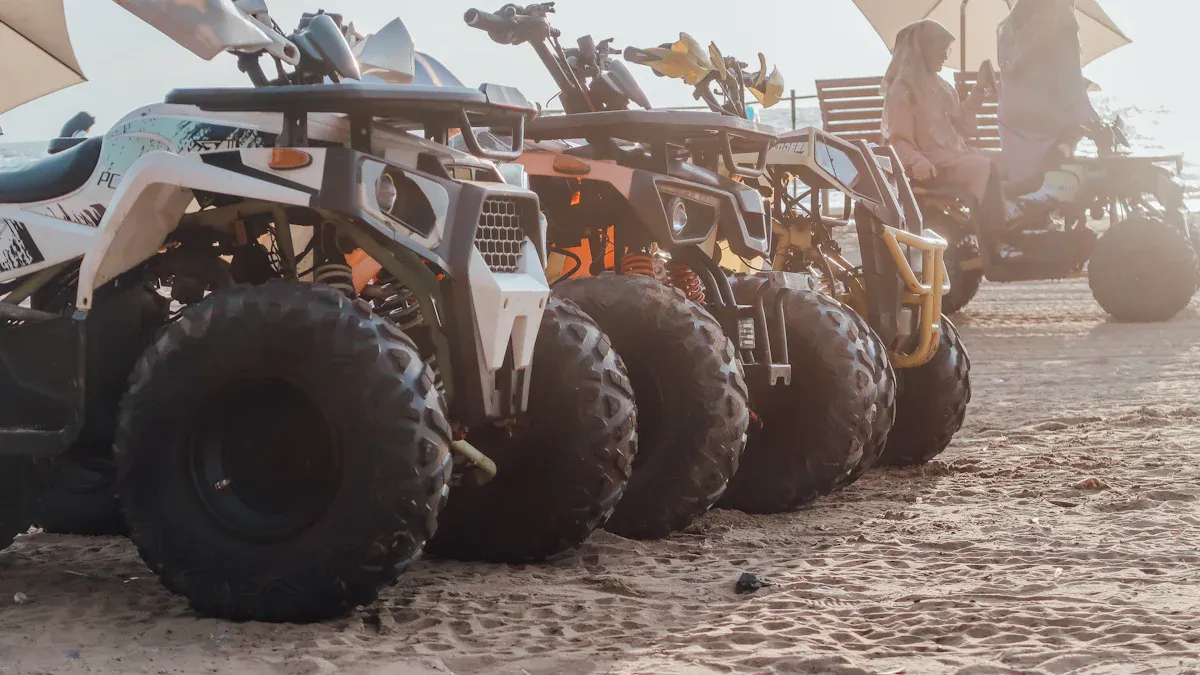
ATVs serve a different purpose in military convoys. These vehicles move quickly and reach places that larger vehicles cannot.
Soldiers use them for scouting, messenger duties, and rapid response. The simple design makes them easy to operate and maintain.
Pros:
- High maneuverability in narrow or rugged terrain
- Quick acceleration for fast response
- Simple controls and easy maintenance
- Low profile for stealth operations
Cons:
- Limited to one rider and minimal cargo
- Offers little protection from hazards
- Less space for communication equipment
| Feature | UTV | ATV |
|---|---|---|
| Crew Capacity | Multiple | Single |
| Protection Level | High | Low |
| Maneuverability | Moderate | High |
| Cargo Space | Large | Small |
| Communication Gear | Extensive | Limited |
Tip: Teams should match the vehicle to the mission. UTVs suit group transport and heavy loads, while ATVs excel in speed and agility.
Use Case Scenarios In Military
When UTVs Are Preferred
Military teams often choose a utv for missions that require teamwork and heavy equipment. For example, during perimeter patrols, soldiers need to move together and carry supplies like medical kits, radios, and extra gear.
The larger crew capacity allows several soldiers to ride at once. This helps with communication and coordination. In search and rescue operations, teams use these vehicles to transport injured personnel safely.
The roll cage and seat belts protect everyone inside. UTVs also work well for supply runs in rough terrain. The cargo space holds food, water, and ammunition. These vehicles support missions where safety, teamwork, and equipment transport are important.
Teams rely on UTVs when they need to move as a group and carry essential gear for the mission.
Common scenarios for UTVs:
- Perimeter patrol with multiple soldiers
- Medical evacuation during emergencies
- Supply transport in difficult terrain
When ATVs Are Preferred
ATVs serve best in missions that require speed and access to tight spaces. For reconnaissance, a single soldier can use an ATV to scout ahead of the convoy.
The small size lets the rider move through narrow trails or dense forests. In quick response operations, ATVs help soldiers reach remote locations fast. Messenger duties also suit these vehicles.
A soldier can deliver urgent messages or supplies between units. ATVs work well when the mission needs agility and rapid movement, not heavy loads or group transport.
Soldiers choose ATVs for tasks that demand speed, stealth, and the ability to reach hard-to-access areas.
Common scenarios for ATVs:
- Scouting ahead of the main convoy
- Quick response to emergencies in remote areas
- Messenger duties between units
By matching the vehicle to the mission, military teams improve safety and efficiency during convoy operations.
Conclusion
Military teams select UTVs for missions that need group transport, safety, and heavy equipment. ATVs fit tasks that require speed, agility, and access to tight spaces.
- UTVs work best for perimeter patrol, supply runs, and medical evacuation.
- ATVs excel in scouting, quick response, and messenger duties.
Matching the vehicle to the mission improves convoy safety and success.