

Digital Night Vision Devices China Manufacturer and Wholesale Supplier
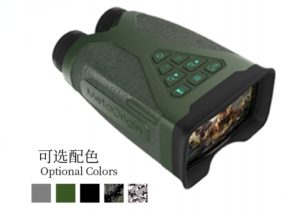
Next-Gen Handheld AI Full Color Night Vision Binoculars
H WIN AI Full-Color Night Vision Binoculars for Long-Range [...]
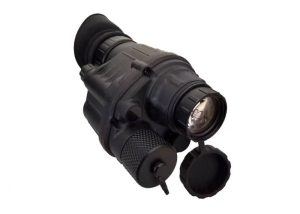
Head-Mounted Night Vision Monocular
Digital Night Vision Monocular for Tactical Operations, Wildlife Observation, [...]
What Are Night Vision Devices
Night Vision Devices are essential tools for outdoor enthusiasts, security professionals, and tactical operations. Designed to enhance visibility in low-light and complete darkness, these devices allow users to observe their surroundings clearly, ensuring safety and precision.
Handheld Night Vision Binoculars
Portable and easy to use, these binoculars feature AI-enhanced full-color night vision technology. Ideal for hunting, wildlife observation, outdoor exploration, and security monitoring, they provide detailed and accurate visuals even in the darkest environments.
Head-Mounted Night Vision Monoculars
Lightweight and hands-free, these monoculars are perfect for night patrols, military training, and outdoor adventures. Designed to deliver a stable and clear view in complete darkness, they keep your hands free for other tasks while maintaining safety and efficiency.
Key Applications of Night Vision Devices
- Outdoor Adventures: Night hiking, camping, and exploration
- Hunting & Wildlife Observation: Spotting animals from a distance
- Security & Surveillance: Nighttime monitoring and patrol
- Tactical & Military Operations: Enhancing vision in low-light conditions
What to Look for When Buying Night Vision Device
Resolution (lp/mm)
Resolution in image-intensified devices is measured in line pairs per millimeter. Gen 1 devices typically deliver 25–35 lp/mm; Gen 3 devices reach 45–64 lp/mm. For digital devices, look for 1080p video recording at minimum — some 2026 models now offer 4K capture.
Effective Range
Manufacturer-stated ranges can be optimistic. For practical use, look for user-verified range figures. Entry-level digital devices typically perform well to around 300 meters. Military-grade Gen 3 units are effective at significantly greater distances under good conditions.
Battery Life
Battery life is critically important for field use. Look for devices with USB-C rechargeable batteries where possible; older AA-dependent designs are less practical. Modern digital NV goggles often deliver six hours with the IR illuminator active and up to ten hours with it off.
Weatherproofing
IP-rated waterproofing is a must for any outdoor application. IP65 (protection against water) is the minimum recommended rating for hunting, security patrols, or any extended outdoor use.
Mounting Options
Versatility matters. Many of the best devices now support handheld, head-mounted, and tripod configurations in a single unit. This flexibility dramatically expands the range of scenarios in which a single device can be useful.
Buyer’s note: If you are entering the night vision market for the first time this year, you are doing so at the best time in the technology’s history. The performance that was protecting forward operating bases a decade ago is now accessible to civilian buyers at accessible price points.
New Trends: AI Integration and the Future of Night Vision
Artificial intelligence has moved from a marketing buzzword to a genuine feature in leading devices. AI-driven image enhancement reduces noise and sharpens detail in real time, meaning devices with mid-tier sensors can now produce imagery that previously required higher-grade hardware. Object detection algorithms are beginning to assist users in identifying targets at range — a feature that has significant implications for security and search-and-rescue applications.
Sensor resolution is rising while prices fall. The 640×512 thermal sensor resolution that defined premium thermal devices just two years ago has become a mid-range standard in 2026. Hybrid fusion systems — combining image-intensified NV with thermal channels in a single device — are entering the commercial market, offering users the identification advantages of NV alongside the detection advantages of thermal in one package.
Lighter, more compact form factors are also a defining trend. Advances in materials science have allowed manufacturers to dramatically reduce the size and weight of high-performance devices without sacrificing optical quality. White phosphor displays — offering a more natural, high-contrast image compared to the classic green — have moved from premium to mainstream.